ServicesWalkways and Sidewalks
Walkways and Sidewalks in Lakewood
We remove old walks that trip people up and pour new concrete on a compacted base, sloped so water runs off. You get photos at each step, from the old slab coming out to the finished broom texture, so you know what is under your feet.
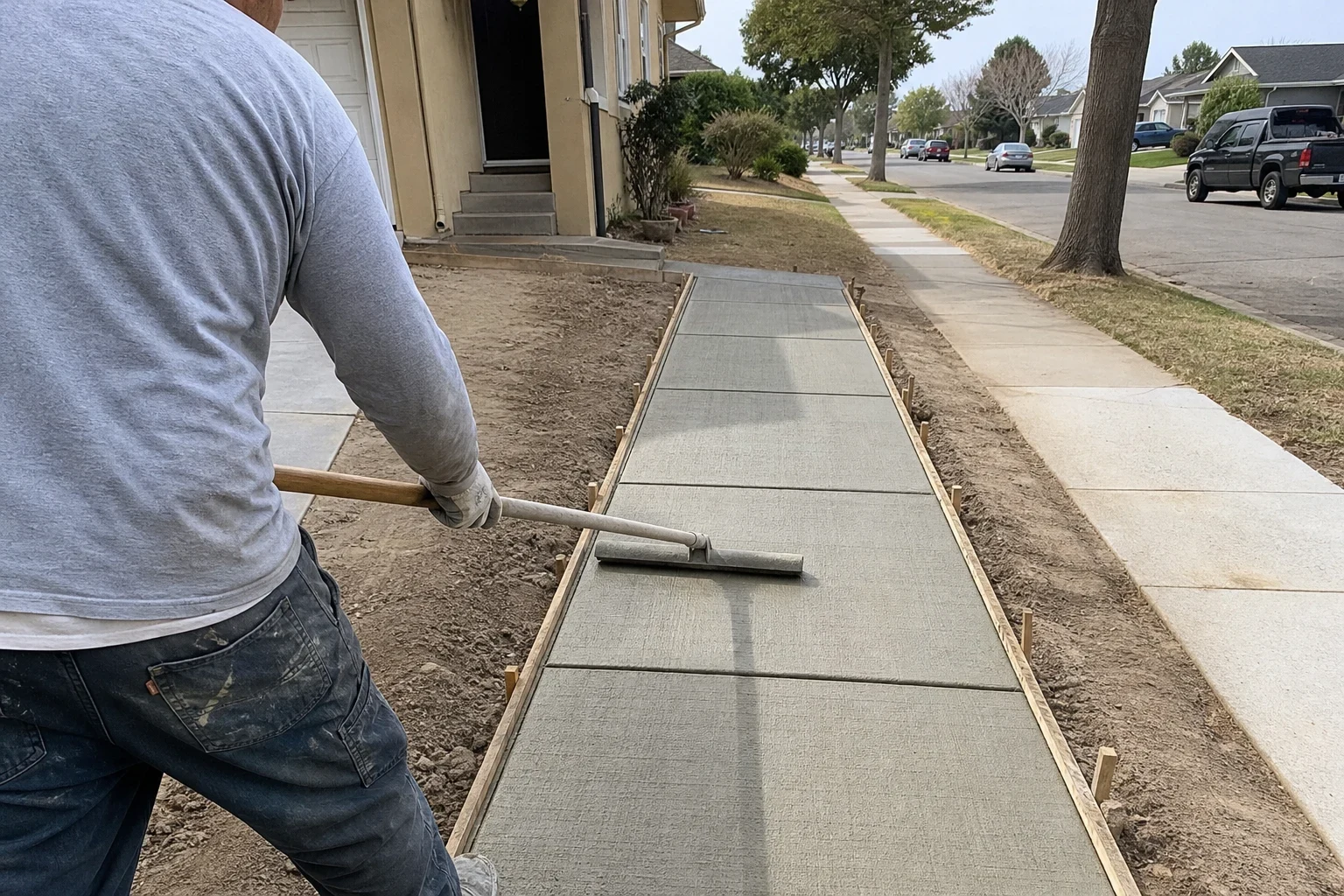
New walks, built from the base up
A walkway takes foot traffic every day, and most of what makes it last is buried. If the dirt underneath was never compacted, or roots got under it, the slab cracks and lifts no matter how nice the surface looked. We build the part you will never see with the same care as the part you will.
We pour front walks, side paths, garden paths and the stretch of sidewalk in front of your home. Some jobs replace a walk that has heaved or split. Others add a path where people have already worn one into the lawn.
As we go, we photograph the old slab, the base, the forms and the steel before any concrete covers them. You keep those pictures. If you ever sell the house or just wonder what is down there, you have the record.
What the job includes
- 01
Old walk out and gone
We jackhammer the old slab into chunks and load every piece onto our truck. When we leave, there is no rubble pile sitting by your fence.
- 02
Compacted base
We grade the soil and lay crushed rock, then compact it with a plate compactor. This is the layer that keeps the walk from sinking.
- 03
Forms, slope and layout
We set forms for straight runs or curves and pitch the walk slightly away from your home so rain drains off. We check that it lines up with your steps, driveway and gate.
- 04
Reinforcement and joints
Steel goes in before the pour. We cut or tool control joints every few feet so the slab cracks where we want it to, along a clean line.
- 05
A surface you won't slip on
We drag a broom across the wet concrete to leave fine ridges, which give shoes something to hold after rain or sprinklers. The edges get a smooth troweled border. For a decorative look, ask about our stamped concrete work.
- 06
Photo record
You get pictures of each stage. Nothing gets buried that you have not seen.
Questions about Walkways and Sidewalks?
Call(562) 573-5481Signs it is time for a new walk
Lips and ledges between slabs
A section that has risen even half an inch above its neighbor is enough to catch a shoe. That lift usually comes from roots or shifting soil below, and grinding down the high side leaves the cause in place.
Roots pushing up the slab
Many yards have mature trees planted decades ago. Their roots can lift a walk an inch or more. We pull the slab, deal with what we can at the roots and rebuild.
Water that pools or runs toward the house
Puddles that sit after rain, or water flowing back at your foundation, point to a walk that has settled or was poured flat.
Cracks that keep spreading
Hairline cracks are normal. Wide cracks with broken pieces mean the slab has lost support and is due for replacement.
A dirt track through the grass
When family and visitors keep shortcutting over the lawn on the way to the side gate, your yard is already showing you where a walk should go.
How a walkway job runs
- 1
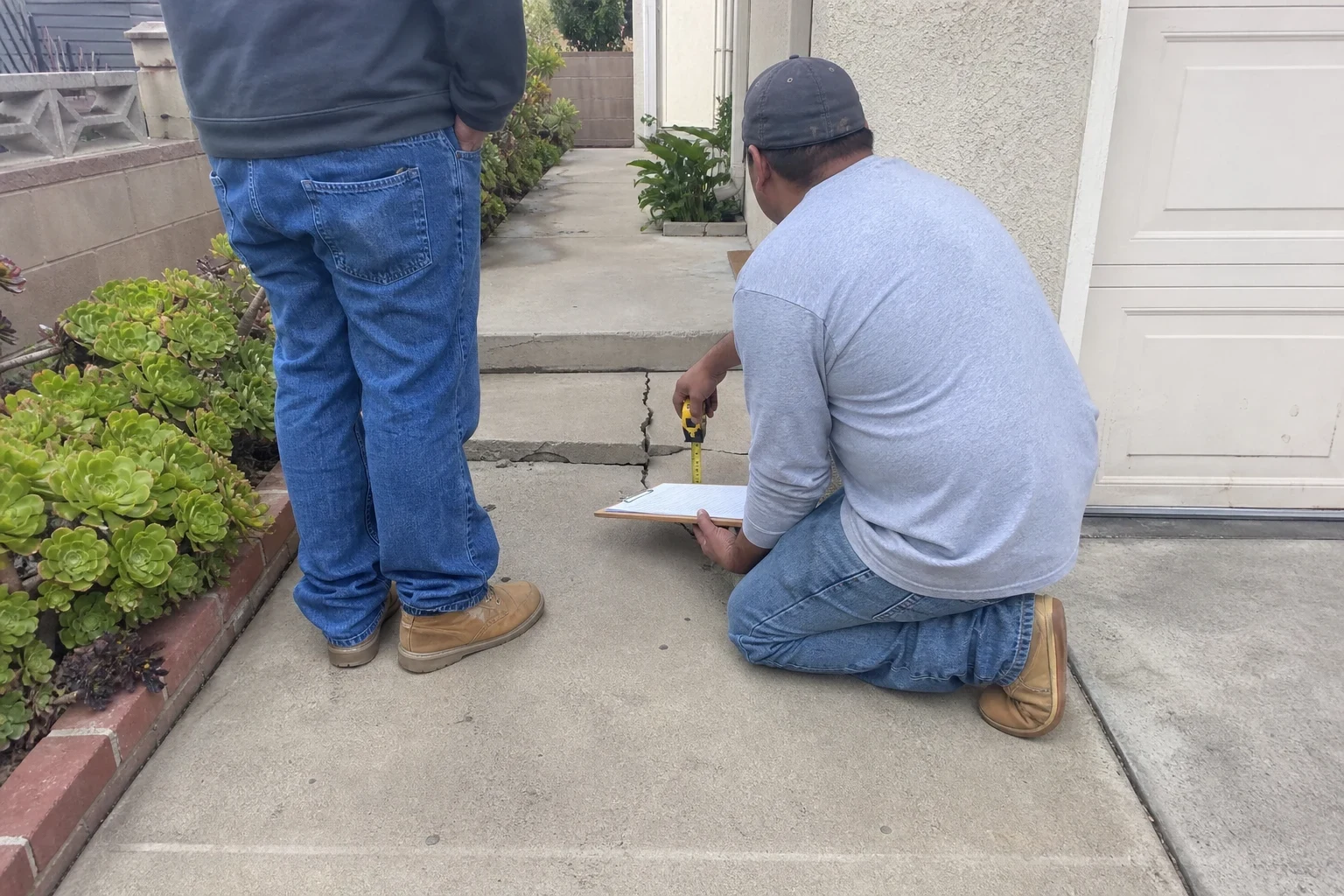
Look and measure
We walk the site with you, measure, and talk about width, shape and where water should go. You get a written estimate with each part spelled out.
- 2
Permits if needed
A sidewalk along the street usually sits in the public right-of-way, and the city may require a permit for it. We check before we schedule and pull it when it is needed.
- 3
Demo and base
Day one is usually tear-out, grading and compacting the base. We take pictures of the bare ground and the finished base for you.
- 4
Forms, steel and pour
We set forms, place steel, and send you pictures before the pour. Then we place, finish and joint the concrete in one go.
- 5
Cure and clean up
Plan to stay off it for about a day and keep heavy loads off for a week. We pull the forms, backfill the edges, clean up and send the final shots.
What moves the price of a walkway
Walkway pricing mostly comes down to size and what we find when the old slab comes out. We give you a line-item estimate after seeing the site, so you know what each part costs before we start.
- Size and layout
- A longer or wider walk needs more yards of concrete and more hours of finishing. Curved paths also take extra time, since the forms have to be bent and staked by hand.
- Demolition of the old slab
- An extra-thick walk, or one packed with old steel, takes more hours to jackhammer apart. It also means more weight to load up and truck off.
- Getting to the spot
- A walk right by the curb is easy to reach with the truck. A path tucked behind a narrow side gate may mean wheeling concrete in by hand or bringing a pump.
- Roots and soil
- Large roots, soft ground or extra base rock add time and material. We show you what we find and talk with you before doing extra work.
- Permit and finish
- Right-of-way permits and decorative finishes like stamping or color add to the total.
Walkway and sidewalk questions
My walk is cracked and lifted. Do I need a whole new one?
We pour new walkways and sidewalks. If your walk is cracked or lifted, we remove the bad sections or the whole run and replace it on a proper base. We will tell you honestly whether the full run needs to go or just part of it.
How thick should a walkway be?
Most residential walks are about four inches thick over compacted rock. Where a walk crosses a spot that may see a car or a trash truck, we go thicker. We note the thickness in your estimate and take a picture of the forms so you can see it.
Who handles the sidewalk out by the street?
That strip usually belongs to the public right-of-way, so the city has rules about how it is built and often requires a permit. We check those rules for your address and pull the permit when one is needed. If the city maintains that section itself, we will tell you.
How long until we can walk on it?
Light foot traffic is usually fine after about a day. Wait a week before rolling heavy things like a loaded wheelbarrow or bins across it. Concrete keeps gaining strength for weeks after that.
Can you match the walk to my driveway or patio?
We can match the finish and line it up with your driveway, patio or steps. New concrete will look lighter than old concrete at first, and it evens out some with time. We can also pour new steps and stairs at the same time so everything ties in.
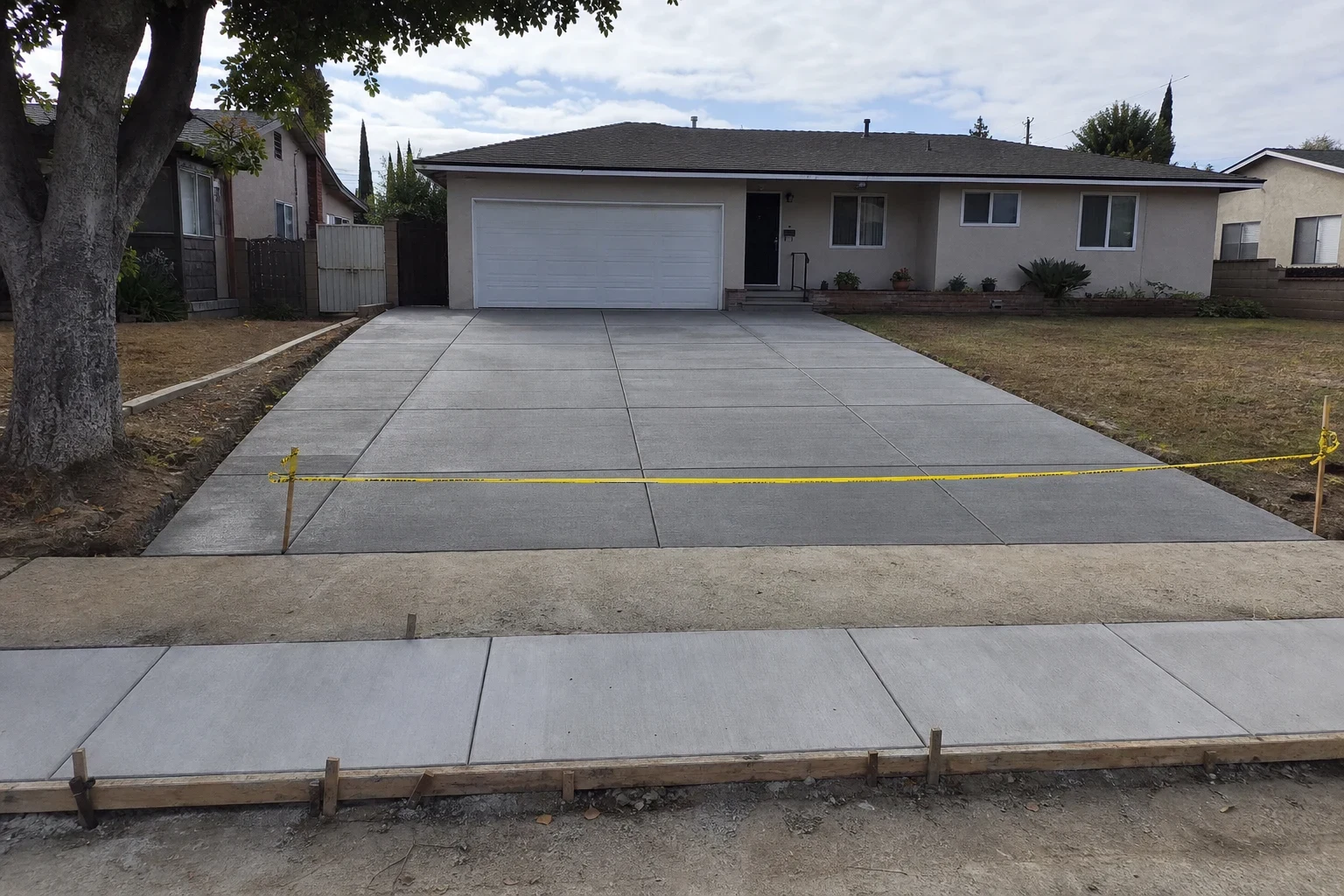
Let's get you a walk that stays flat
Tell us what is going on with your walkway or sidewalk. We will set a time to look at it and go over what it needs.