ServicesPatios
Concrete Patios in Lakewood
We remove the old patio or bare dirt and pour a new concrete slab that drains away from your home and holds up for years. Before any concrete goes in, you get photos of the grading, the forms and the steel.
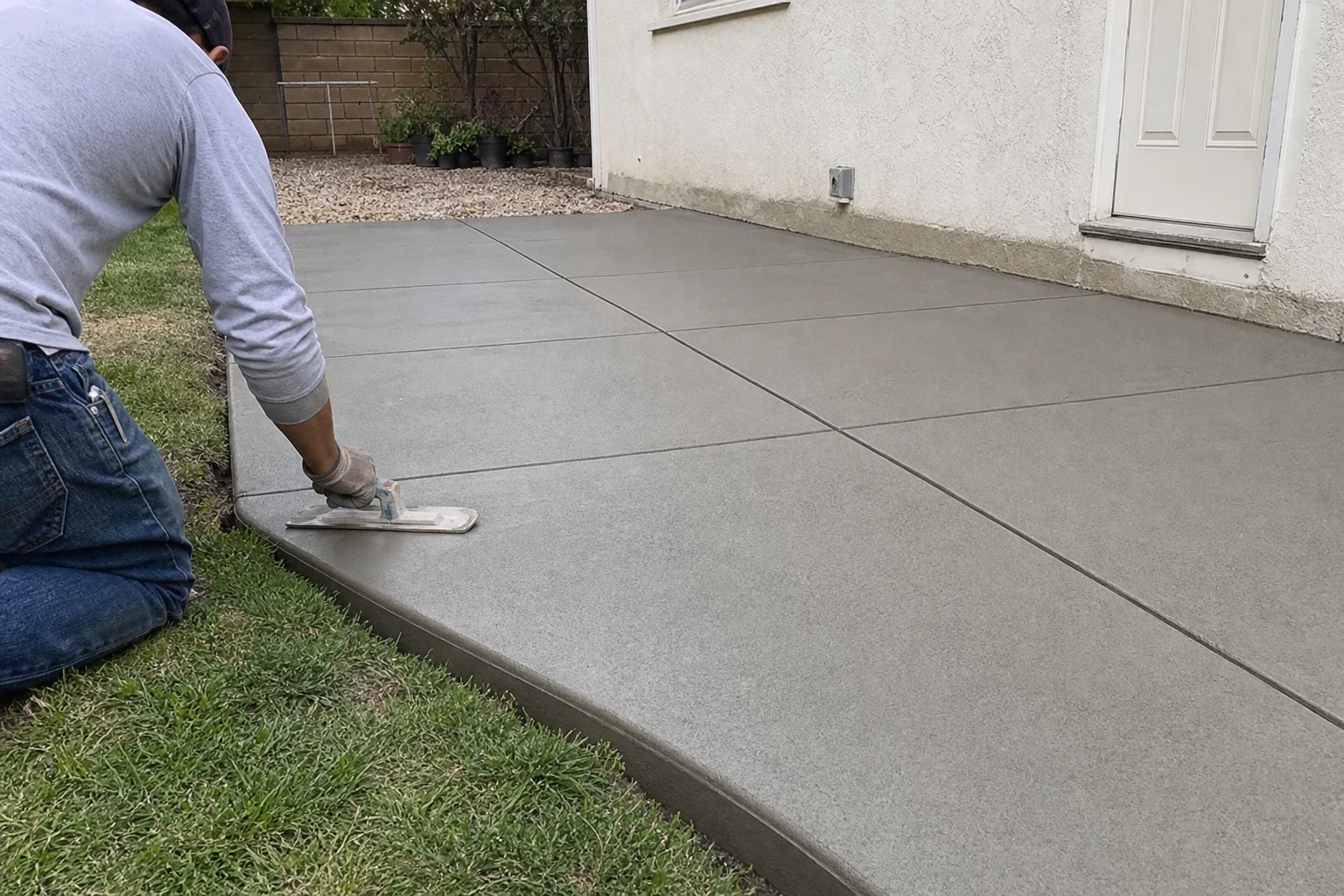
What goes into a patio that lasts
Your patio takes daily use. Chairs scrape across it, kids ride bikes on it, and winter rain runs over it. If the ground underneath isn't prepped well, the slab cracks, sinks or sends water toward the house. Most of the work that keeps a patio sound gets done before the concrete truck shows up.
We build new patios start to finish. We take out what's there now, grade and compact the base, set forms, place steel and pour the slab. Plenty of Lakewood backyards have clay soil that grows when it soaks up rain and pulls back in the dry months, so we take extra care with the base and the slope.
We send you photos as each stage is finished. You see the compacted rock, the rebar and the form heights before they're covered up, so nothing important gets buried without you knowing it was done.
What we do on every patio
- Demo and debris removal
- Old concrete, pavers or brick get broken up and hauled off the property. We also dig out roots and any soft fill.
- Grading and base prep
- We cut the grade, bring in base rock and compact it in layers. The slab is pitched away from your home so water doesn't sit at the foundation.
- Forms and steel
- We set forms to the shape you picked. Rebar is tied and raised on small supports so it lands in the middle of the slab, where it actually does its job. Steel lying on the dirt does very little.
- Pour and finish
- We place, level and finish the concrete. A broom finish is standard because it gives good grip. Smooth trowel, salt finish or a stamped pattern are options, and our Stamped Concrete page covers that work.
- Control joints
- Concrete shrinks as it cures. We cut joints on a planned layout so any cracks run in a straight line instead of wandering across the patio.
- Cleanup
- We wash down the area, pull the forms and leave the yard clean. Then we walk the finished patio with you.
Signs it is time for a new patio
Cracks that keep spreading
Hairline cracks are common. Wide cracks with one side higher than the other mean the base has moved, and it is often time to replace the slab.
Water flows toward the house
If rain puddles against your back wall or runs under the slider, the slab was set with the wrong slope. A new pour fixes the fall.
Sunken or tilted sections
Low spots hold water and become trip points. This usually means poor compaction or soil washing out underneath.
Pavers or brick that won't stay put
Loose units, weeds in every joint and edges that keep sinking. Some owners trade them for one solid slab.
Bare dirt or a patio that is too small
Many older yards came with a small slab outside the back door. If you want room for a table, a grill and chairs, a larger pour makes the yard usable.
How a patio job runs
- 1
Look at the yard
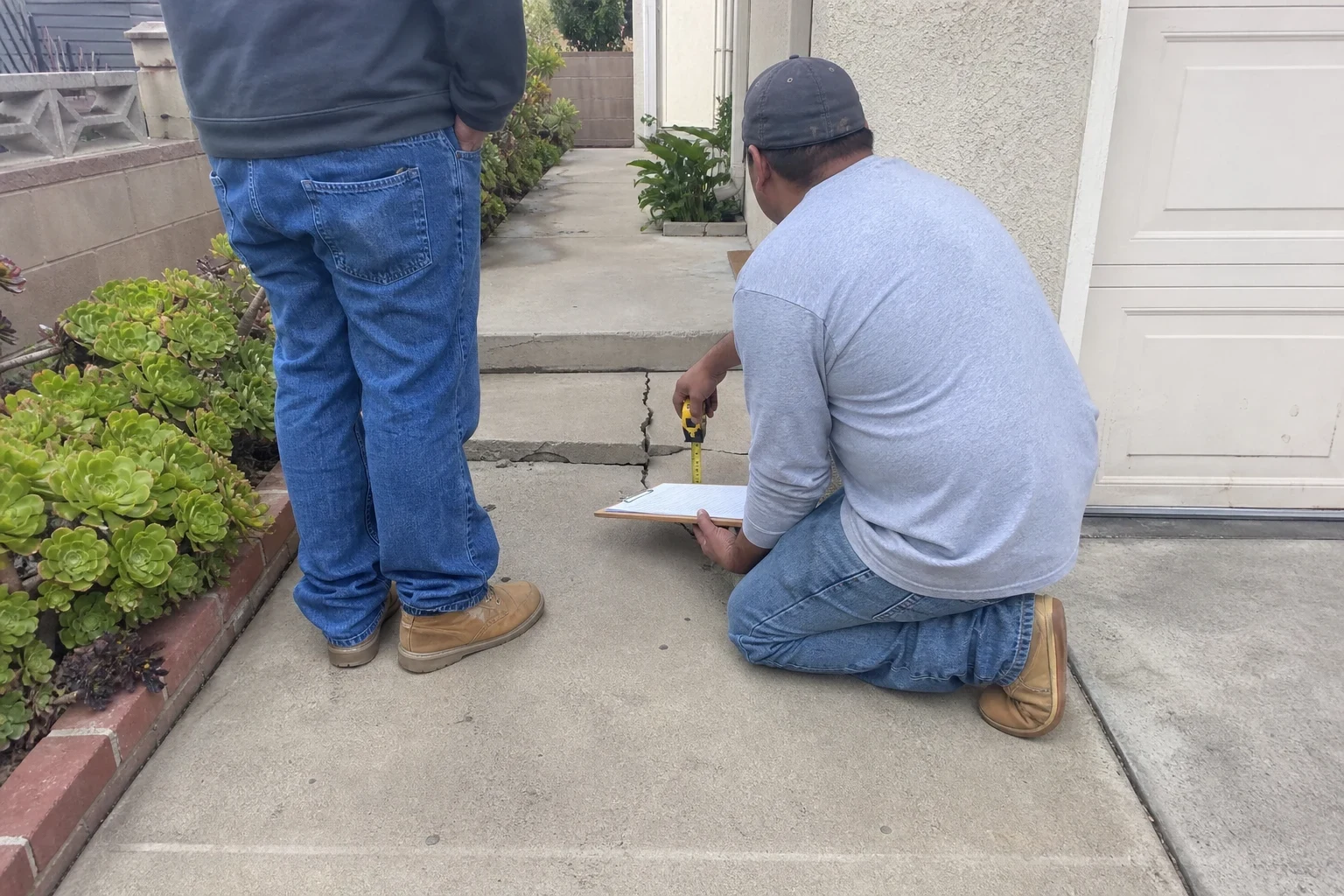
We walk the space with you, measure it and check the slope, the soil and how we will get equipment and concrete back there. We talk about shape, finish and where water should go.
- 2
Written estimate
You get a written estimate with tear-out, base, steel, concrete and finish each priced on its own line. Anything optional is marked that way, so you decide what to keep.
- 3
Demo and prep day
We remove the old surface, grade, compact and set forms and steel. You get photos of each step that day, so you can see the base before it is covered.
- 4
Pour day
Concrete is placed, finished and joints are cut. Most patios are poured in one day. We keep hoses, wheelbarrows and the pump line off your plants as much as the yard allows.
- 5
Cure and walkthrough
We pull forms once the slab has set and walk it with you. You get the finished-patio photos and simple care tips for the first few weeks.
How we price a patio
We don't quote a patio until we've seen the yard. A few things change the number more than anything else. Each one shows up as its own line on your written estimate.
- Size and shape
- More square feet means more concrete, more steel and more labor. A simple rectangle goes up fast. Curves and extra corners take longer to form.
- What has to come out
- Starting on bare dirt costs the least. A thick old slab or a brick patio adds demolition time and dump fees.
- Getting into the backyard
- With a wide gate we can run the truck chute or wheelbarrows right in. A tight side yard may mean renting a concrete pump, and that adds to the total.
- Soil and base
- Soft ground or soil that moves with moisture can call for more base rock and more compaction. We photograph what we find so you can see why.
- Finish
- A broom finish is the simplest. Color, a salt finish or a stamped pattern take extra material and more time.
Patio questions we hear a lot
Something not covered here? (562) 573-5481
How soon can I use my new patio?
You can walk on it lightly the next day. Wait about a week before you roll a grill onto it or set down heavy planters. Concrete keeps gaining strength for close to a month, so go easy on it during that time.
Can you pour new concrete over my old patio?
Sometimes, but we rarely recommend it. A new layer over a cracked or sunken slab tends to crack in the same places, and it raises the surface at your door. We look at the old slab and tell you straight which way makes sense.
Will the new patio drain right?
Yes. Slope is planned from day one. We set the slab to fall away from your home, usually toward the lawn or a drain, and you can check the form heights before we pour.
Do I need a permit for a patio?
Plenty of plain ground-level patios don't require one. That can change with the size, where it sits on the lot, and whether you're adding a cover or footings. We find out what your job needs before we start and let you know if a permit is part of it.
Can the patio connect to a walkway or pool deck?
Yes. A lot of people tie a new patio into a side yard path or the pool area so the yard feels like one space. Our Walkways and Sidewalks and Concrete Pool Decks pages cover that work, and we can plan it all together.
What do the job pictures show me?
Most of what makes a patio last ends up buried under the concrete. Photos of the base, the steel and the forms prove that work was done before it was covered. Keep them with your house records in case you ever need them.
Ready to plan your patio
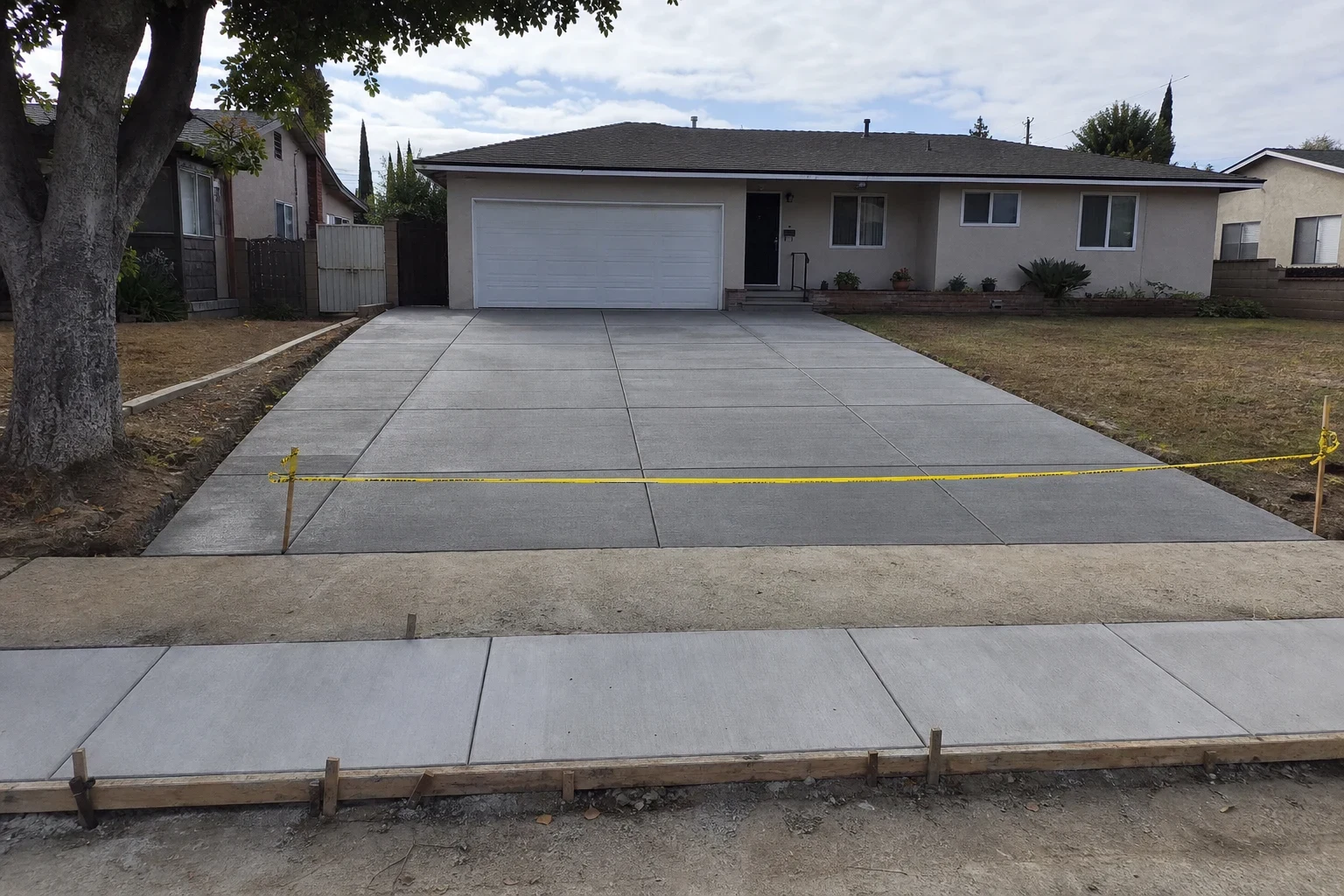
Tell us the size you want and what is back there now. We will set a time to look at the yard and talk through shape, finish and drainage.