ServicesStamped Concrete
Stamped Concrete in Lakewood
We pour stamped concrete that looks like stone, slate, brick or wood plank, for patios, walkways, driveways and pool decks. You get photos of the base, the forms, the color and the stamping, so you know what is under the pattern and not just what is on top.
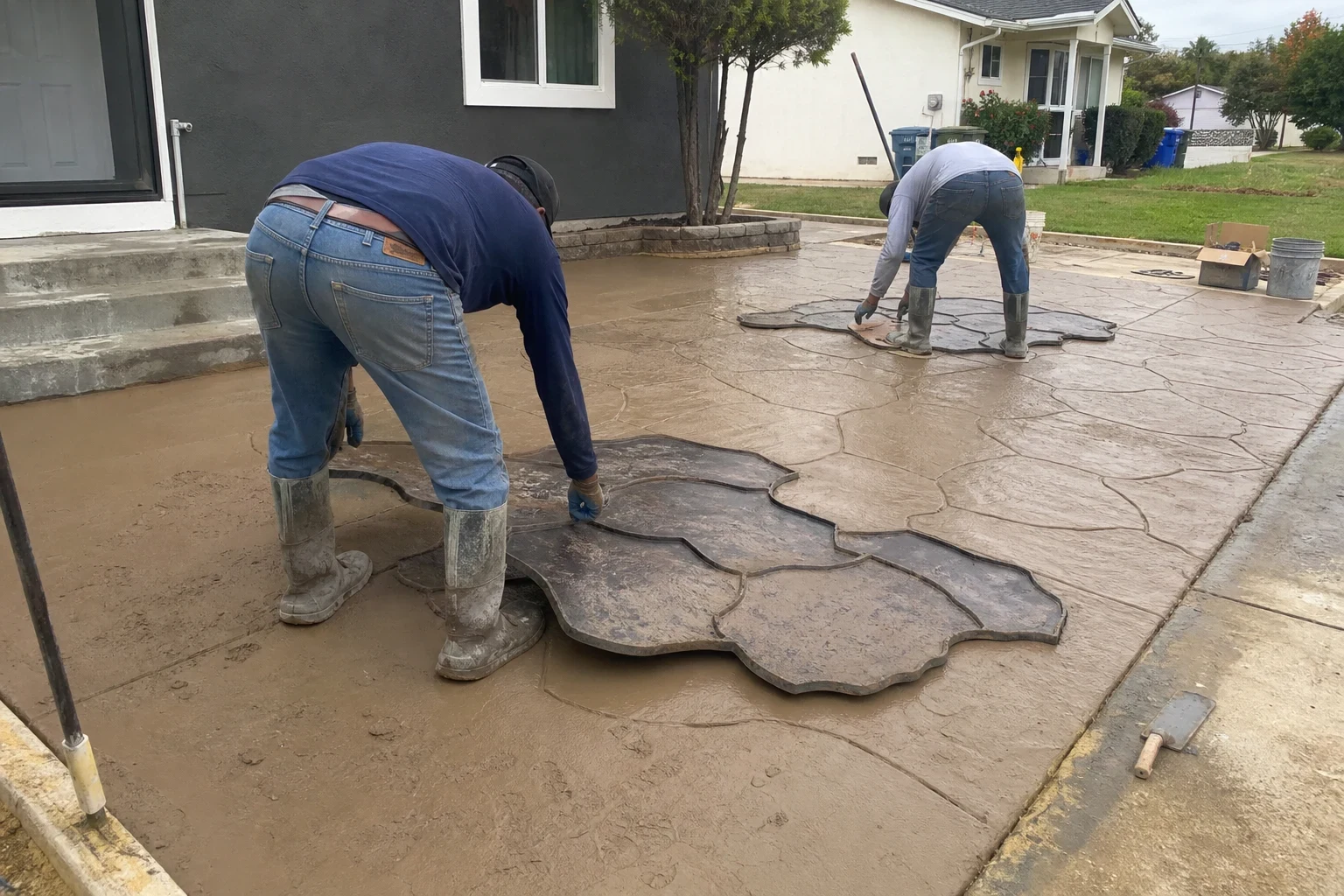
How stamped concrete works and who it suits
Stamped concrete starts as a normal slab. While it is still wet, we add color and press textured rubber mats into the top to leave a stone, slate, brick or wood-plank pattern. Once it cures, it gets sealed. You end up with the look of pavers in one solid piece, with no gaps for weeds.
It is a good fit when you want the outside of your home to look finished, not plain gray. It works well for patios, front walks, courtyards and driveways. It is a weaker fit if you want something you can lift and reset piece by piece later, or if you do not want to reseal every few years.
The pattern only lasts as long as the slab under it. That is why we photograph the grading, compaction and steel before any concrete shows up. Many yards around Lakewood have clay soil that swells when it gets wet, and a solid base keeps that movement from cracking your pattern.
What the job includes
- Tear-out and hauling
- Any old concrete, pavers or turf in the way gets broken up and trucked off. Once the ground is bare, we send you photos of it.
- Grading and compacted base
- We set the slope so water drains away from your home, then spread and compact a gravel base. That layer gets buried for good, so we photograph it for you first.
- Forms and reinforcement
- We build forms to the finished outline of the slab. Rebar or wire mesh is lifted up on small chairs, so the steel ends up in the middle of the concrete instead of lying in the dirt.
- Color and release
- Color can be mixed into the concrete, broadcast on top as a hardener, or both. A release agent in a second shade keeps the mats from sticking and darkens the low spots for depth.
- Stamping and control joints
- We stamp during the short stretch when the concrete is firm enough to hold texture but still soft enough to take it. Control joints are cut to give cracks a planned path, and we often line them up with a grout line in the pattern so they disappear.
- Wash and seal
- After the slab cures, we rinse off the release and put down sealer. Around pools and steps, we can add fine grit to the sealer for better footing.
Signs stamped concrete is right for you
Your patio is plain and tired
A bare gray slab that looks dated can be removed and replaced with a stamped pour that matches your home.
Pavers keep shifting
Pavers that sink, rock or sprout weeds between joints are a common reason people switch to one solid stamped surface.
The old slab is past saving
If the existing concrete is heaved, broken in pieces or sloping toward the house, a new pour with proper base and slope is the better path.
You want a look stone would cost more to get
Stamped concrete gives a slate, flagstone or brick look without laying each piece by hand.
Your hardscape doesn't match
A patterned border or matching color can tie a walkway, patio and driveway together.
How a stamped concrete job runs
- 1
Site visit and samples
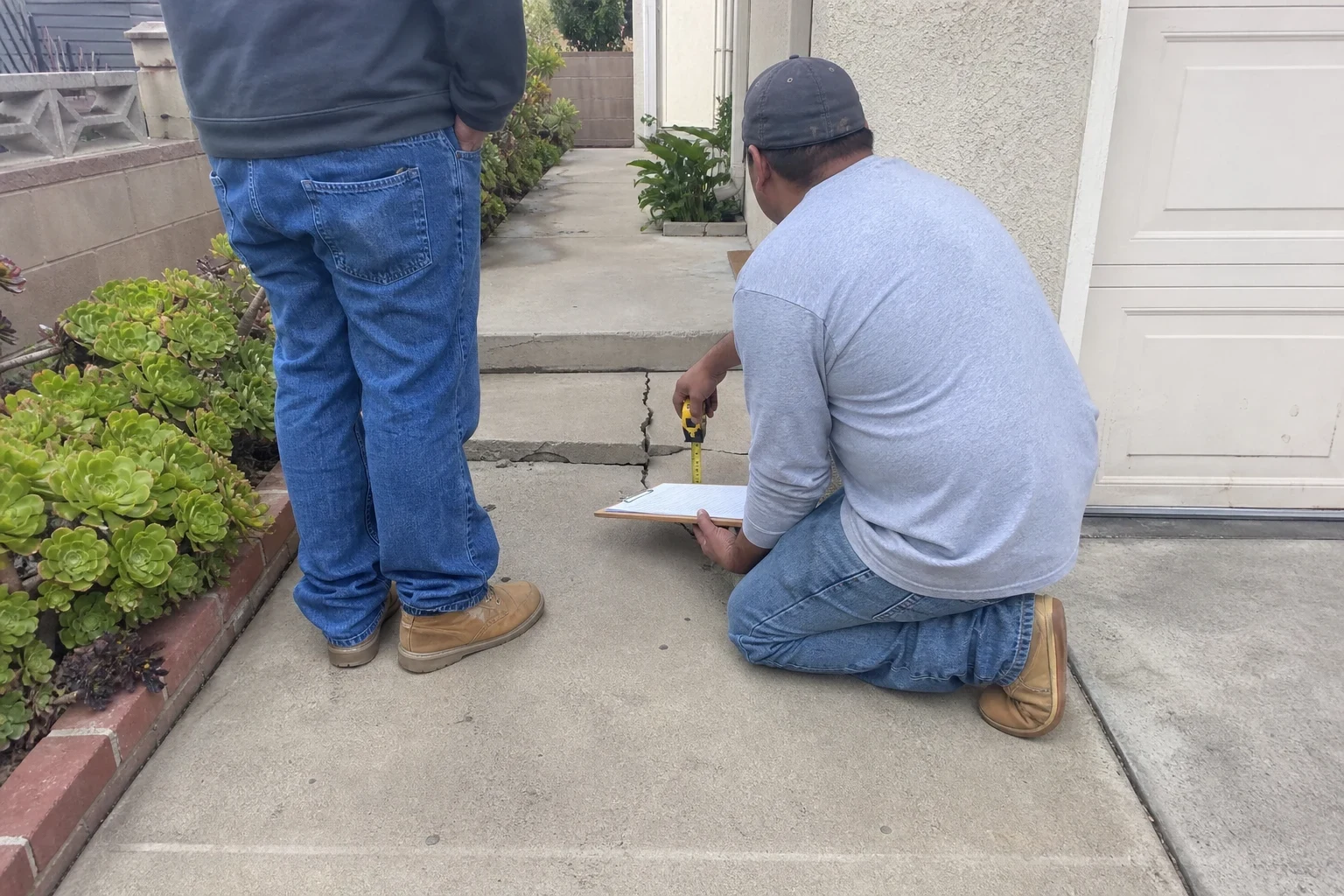
We walk the space, look at where water goes and how a truck will get in, and bring pattern and color samples to compare. Afterward you get a written estimate with each line item spelled out.
- 2
Prep day
Removal, grading, base and forms happen first. We send photos of the compacted base and the steel before the pour goes on the calendar.
- 3
Pour and stamp day
This is a long day with a full crew, because stamping has to happen in a tight window. We pour, color, float, then work the mats across the slab in order. You see the fresh pattern that evening.
- 4
Cut, wash and seal
Control joints get cut within a day or so. After the concrete cures, we wash off the release, seal the surface and clean up the site.
What moves the price
Stamped concrete has no flat rate. It runs higher than a plain slab because of the color, the mats, the sealer and the extra hands on pour day. Your written estimate breaks the job out line by line, so nothing is buried in one lump number.
- Square footage and layout
- The size of the area counts, and so does its outline. Curves, steps and borders take more form work, and the edges of a curved patio need slower, more careful stamping.
- Pattern and color
- One color with a simple pattern sits at the lower end. Two-tone color, a separate border or a stone look with hand detailing adds crew time.
- What comes out first
- Breaking up an old slab and hauling it off adds labor and dump fees. Soft or poor soil that needs a deeper base adds more.
- Getting concrete to the forms
- If the truck can back up close, concrete runs straight down the chute. A tight side yard may mean a pump or wheelbarrows, and that shifts the labor.
- Permits
- A backyard patio usually doesn't need one. Driveway work that touches the curb or public sidewalk often does. We tell you which case you're in and put it on the estimate.
Stamped concrete questions
Something not covered here? (562) 573-5481
Is stamped concrete slippery?
Sealed concrete can get slick when it's wet, and that matters most around a pool. We can blend a fine anti-slip grit into the sealer and use a deeper texture. You keep the look and get better footing.
Will it crack?
Any slab can crack, stamped or not. What keeps a crack small is a firm base, steel set in the right spot and joints cut where we want a crack to land. We photograph the base and the steel before the pour, so you can see that work was done even after it's covered.
Can you stamp over my existing patio?
No, we pour new stamped concrete instead of laying a thin coat over an old slab. Cracks and bad slope in the old concrete tend to show up again in whatever goes on top. We remove it and start fresh on a proper base.
How often does it need resealing?
Figure on resealing about every two to three years to keep it looking right. The sun wears down the sealer, but the color in the concrete itself holds. When the surface looks dull or water soaks in instead of beading up, it's time.
When can we use it?
Foot traffic is fine after a day or two. Patio furniture can go back after about a week. On a driveway, we usually say give it around a week before cars and longer before heavy trucks.
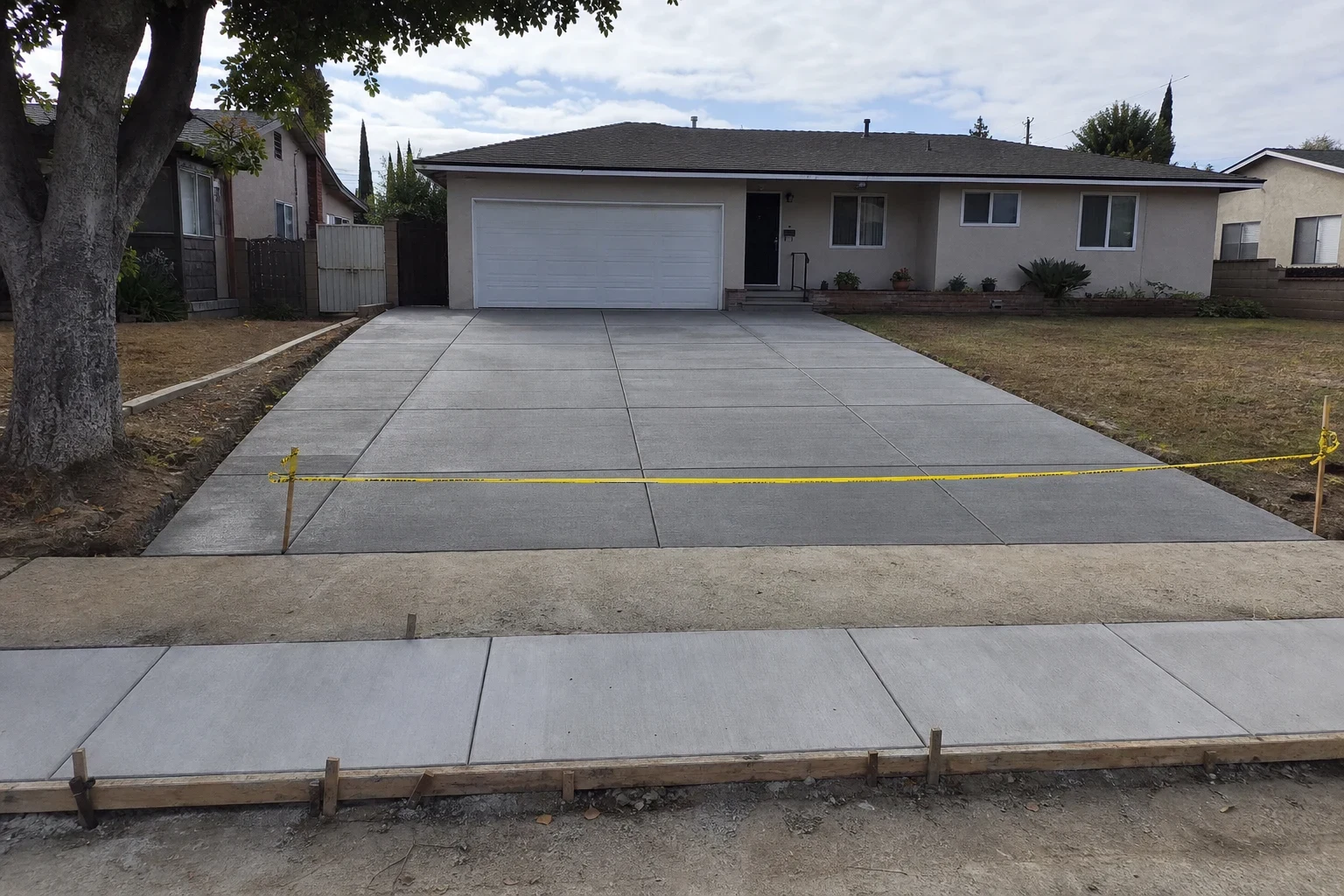
Ready to see what your yard could look like
Give us a call and tell us the size of the area, the look you want and what the space gets used for. We will come out with pattern and color samples and look at the spot in person. We work in Lakewood and nearby towns like Long Beach, Bellflower and Cerritos.