ServicesDriveways
Concrete Driveways in Lakewood
When an old driveway is cracked, sunken or lifted by roots, we take it out and build a new one from the ground up. You see photos of the soil, base and steel before concrete covers them, so you know what's holding up your car.
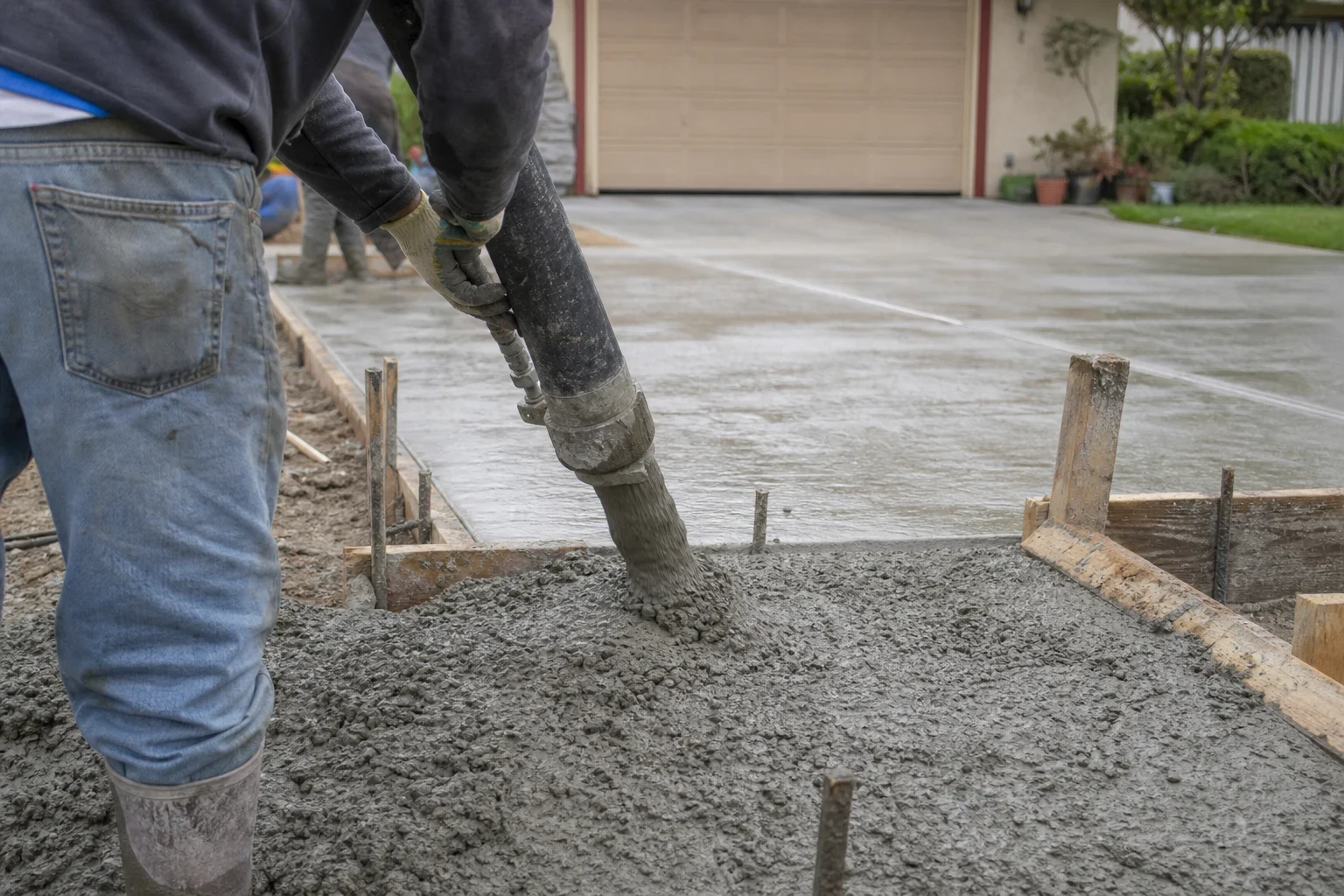
A new driveway, start to finish
Your driveway carries more load than any other slab at your home. It holds the family cars every day, plus a delivery truck or a loaded trailer now and then. Once a slab has broken through or dropped, filling the cracks won't stop it from moving. Starting over is usually the better spend.
The things that decide how long a driveway lasts end up buried. That's the base depth, how tight it was packed, where the steel sits and how the joints are laid out. We take pictures at each of those stages and send them to you, so the hidden work is on record.
A lot of houses in Lakewood still have the driveway that went in with the house, often poured thin with no reinforcing. If that's what you have, we'll say so and explain what a new one needs.
What the job includes
- Removal and hauling
- We cut and break the old slab, load it out and take it off your property. Nothing gets left stacked by the curb.
- Ground work under the slab
- Loose dirt, old root runs and soft pockets get dug out first. Then we bring in base rock as needed and pack it down one layer at a time with a plate compactor. You get a picture of the finished base before anything is poured on it.
- Slope, forms and reinforcing
- Forms are set so rain drains toward the street and away from the garage. We tie in rebar or lay mesh, then mark where the control joints go so shrinkage cracks run where we want them.
- Placing and finishing
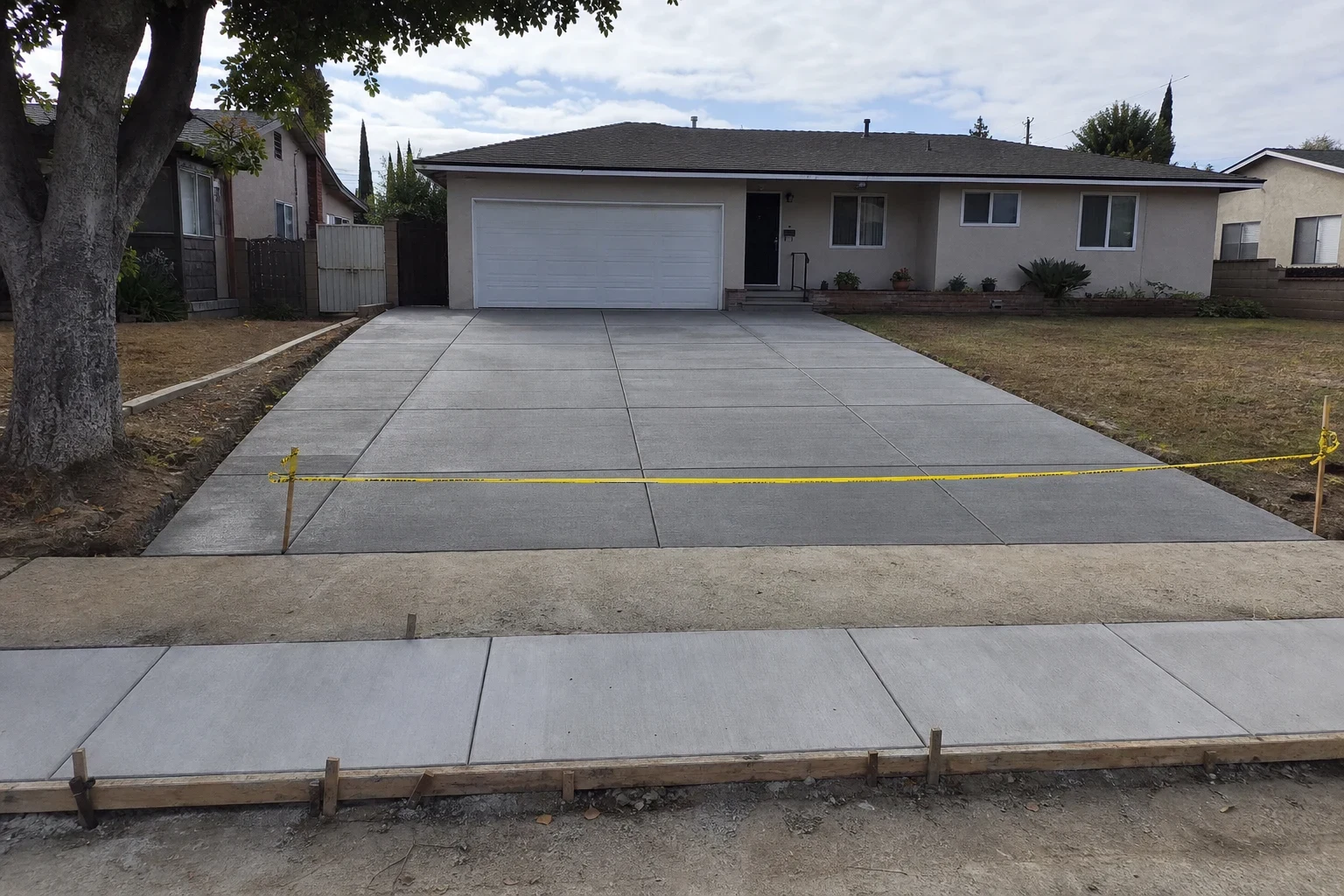
- Most driveways get a broom finish so tires and shoes grip when it's wet. If you'd like color or a pattern, our Stamped Concrete page covers those options.
- Permit for the curb section
- Work at the apron, curb cut or public sidewalk usually needs a city permit. We file for it and book the inspection.
- Cleanup and your record
- The site gets swept and rinsed before we leave. You keep the full set of photos, from the first cut to the finished surface.
Signs it's time for a new driveway
Wide or offset cracks
Thin surface lines come with concrete. A crack wide enough to catch a coin, or one with a raised edge, tells you the ground under it has shifted.
Low spots that hold water
Puddles that sit after a rinse point to soil that settled or washed out under the slab.
Root damage
A tree root can push a slab up until it snaps. Shaving down the lip helps for a while, but the root doesn't stop growing.
Flaking and pitting
When the top layer peels and loose gravel shows, the surface is breaking down. A coat of sealer won't rebuild it.
Wrong slope
Water that runs to the garage door or toward your home's foundation means the pitch is off. The real fix is a new pour set to the right grade.
How a driveway job runs
- 1
Site visit
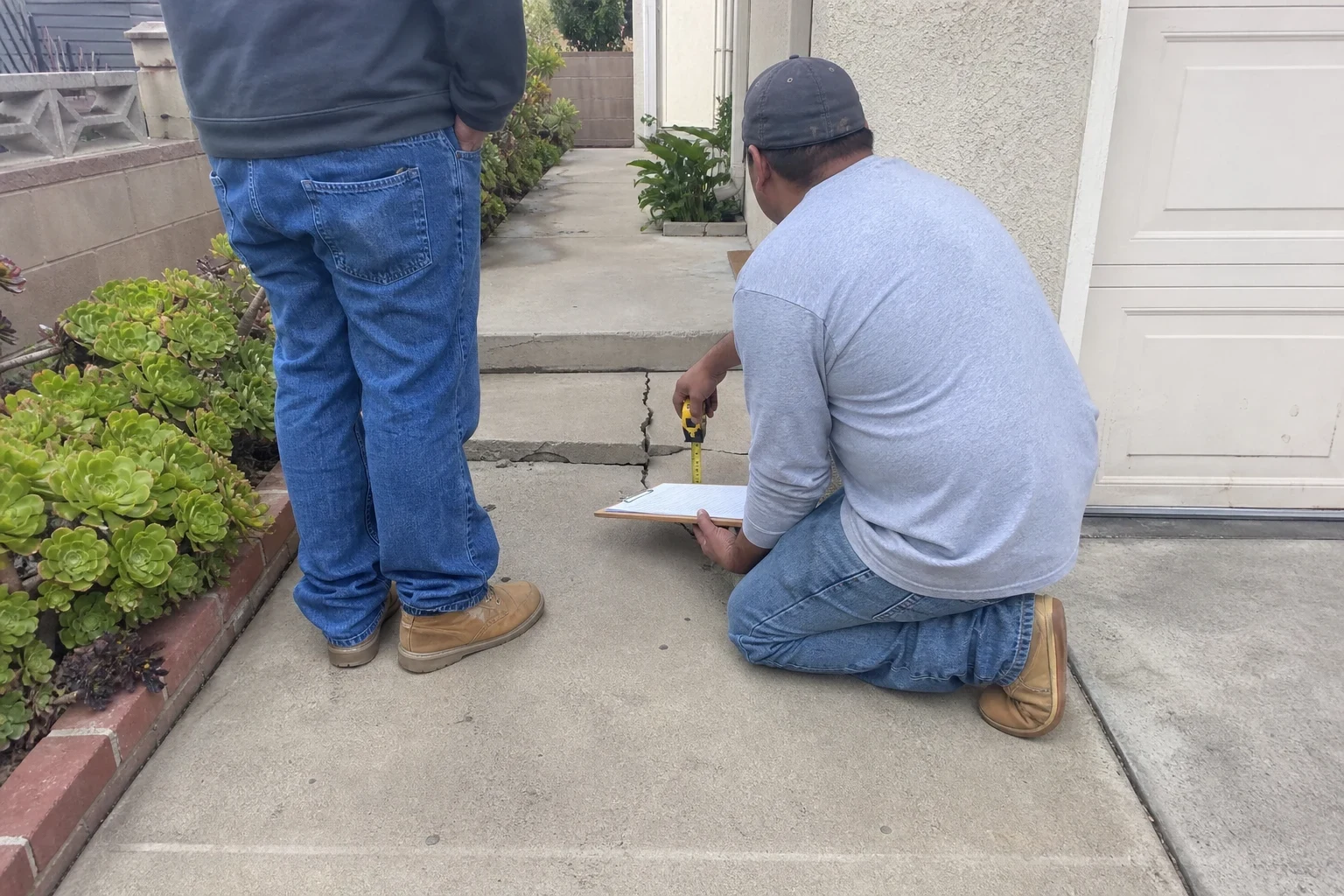
We come out, walk the driveway with you and take measurements. We check the grade, nearby trees and where a mixer truck can park. You then get a written estimate broken out line by line.
- 2
Tear-out
We remove the old concrete and haul it away. The bare ground gets photographed right then, because voids, roots and wet soil are easiest to spot before anything covers them.
- 3
Base, forms and steel
Problems we found get fixed, the base is compacted, and forms and steel go in. We send you pictures of this stage so you can check the depth and reinforcing before the pour.
- 4
Pour
The concrete truck shows up, our crew places and finishes the mix, and joints get tooled or saw-cut. From here on, keep vehicles off.
- 5
Final walk
After the forms come off, we clean up and walk the new driveway with you. You'll leave knowing the day you can walk on it and the day you can park on it.
What moves the price of a driveway
We price each driveway after seeing it in person. Two jobs with the same footprint can land at different numbers because of the soil, the old slab and how easy it is to get trucks in. Your estimate lists each of these on its own line, so you can see where the money goes.
- Area and slab depth
- A bigger driveway takes more concrete, more steel and more labor. Pouring it thicker for a heavy truck or van adds material as well.
- Surprises under the old slab
- Old concrete that turns out extra thick, buried roots or soft ground all add hours to demo and base work. If we run into something like that, we send you a picture and talk it over before doing any extra work.
- Surface finish
- Of all the finish choices, a broom texture costs the least. Mixing color into the concrete, washing back the top to show the stone, or pressing in a pattern each takes more material and more time from the crew.
- City permit
- Rebuilding the apron or the strip by the curb brings a permit fee and an inspection.
- Getting trucks in
- When the mixer can back right up to the forms, the pour is simple. A narrow side or a long reach may mean bringing in a pump truck.
Driveway questions we hear a lot
Something not covered here? (562) 573-5481
When can I park on my new driveway?
Walking on it is usually fine after a day or two. Regular cars should wait about a week. Heavier trucks need longer than that, since concrete keeps gaining strength well after it looks dry. We'll give you dates based on the weather during your pour.
How thick should a driveway be?
Four inches is typical for everyday cars. If a heavy pickup or work van parks there, we pour thicker and add steel. For a boat or motorhome, look at our Concrete RV Parking Pads page.
Will my new driveway crack?
Concrete shrinks a little as it cures, so some cracking is expected. Our control joints give those cracks a straight line to follow instead of wandering across the slab. A well-packed base keeps the whole slab from shifting and breaking later on.
What will you send me during the job?
You get photos of the old slab coming out, the open ground, the packed base, the forms and steel, and the finished surface. If something turns up that changes the scope, like a big root or a hollow spot, you see it before we do any extra work.
Do I need to be home while you work?
You don't have to stick around the whole time. It helps to meet us on the first day and come back out for the last walk-through. Pull your cars out of the garage before we start breaking concrete, because they can't drive out again until the new slab is ready to hold weight.
Thinking about a new driveway?
Give us a rough size, what's going wrong with the current one and what you park on it. We'll set a time to come by, measure and walk you through the choices.