ServicesConcrete Side Yards
Concrete Side Yards in Lakewood
We pour concrete side yards that drain away from your house, sit below the stucco line and fit around meters, AC units and hose bibs. You get photos of the base, the forms and the finished slab, so you know what is under it.
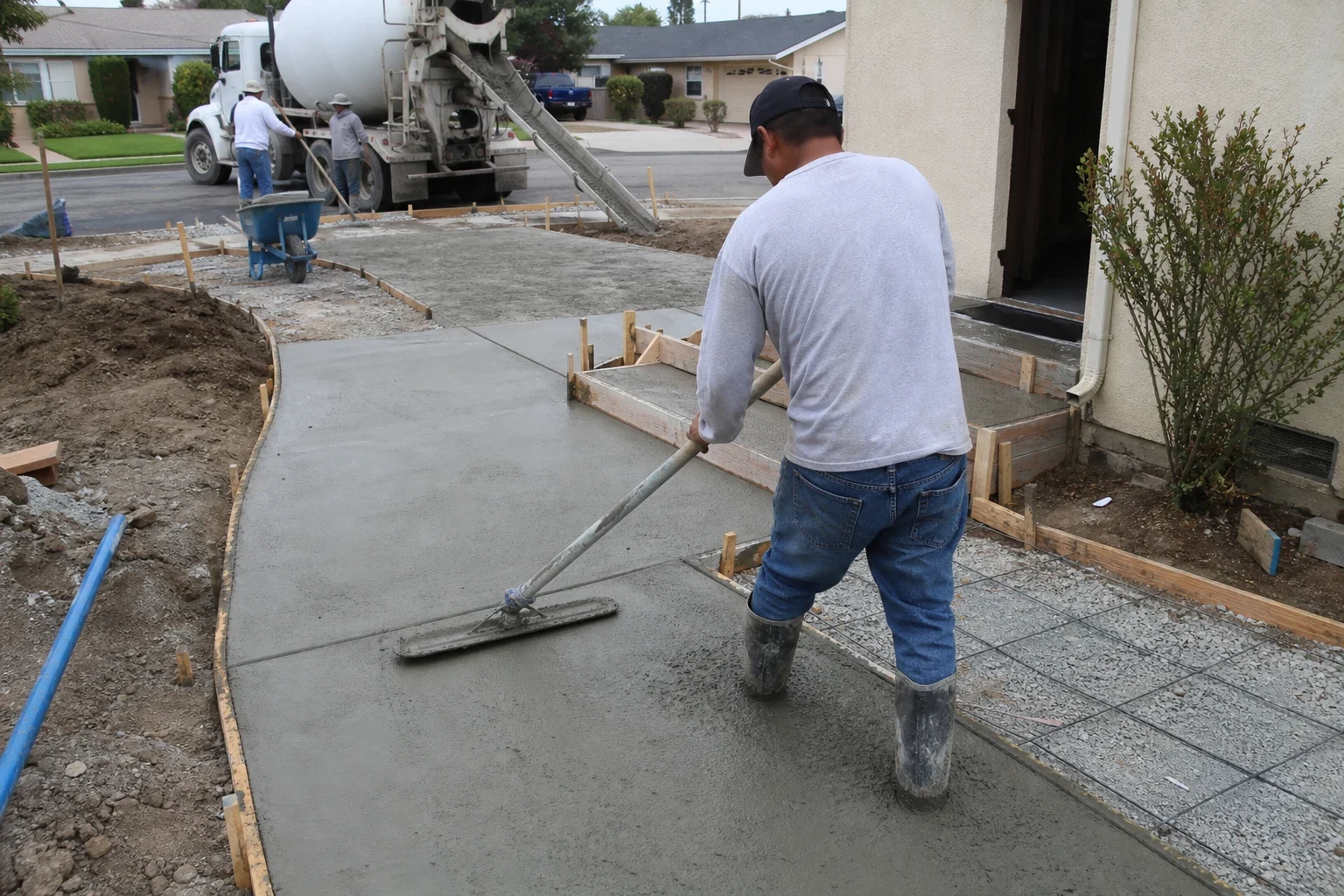
A clean, dry path along the side of your home
The side yard is the strip between your house and the fence. On a lot of homes it is bare dirt, old pavers or a cracked walk that holds water against the wall. New concrete turns it into a usable path for trash cans, tools and getting to the backyard without mud.
Side yards are narrow, so the details matter more than on an open patio. The slab has to slope away from the house. It has to stay low enough that the stucco weep screed is not buried. And it has to work around the gas meter, the AC pad and the cleanout cap. We plan all of that before anything gets poured.
We take photos as we go. You see the soil after dig-out, the compacted base, the forms and the slope before the truck shows up. If the slab is ever questioned later, you have a record of how it was built.
What the job includes
- Removal of what is there now
- We break out old concrete, pull pavers or strip weeds and dirt down to the right depth. Debris gets hauled off, not left behind the fence.
- Grade set away from the house
- We set the slope so rain runs toward the yard, the street or a drain, never toward the wall. We show you the string lines before the pour so you can see which way the water will go.
- Clearance below the stucco
- Stucco walls have a weep screed near the bottom that needs room to breathe. We set the finished height so the slab stays below it and the wall can still drain.
- Compacted base and reinforcement
- Gravel base is spread and packed down. The rebar or wire gets lifted off the ground with chairs so it sits in the middle of the concrete instead of at the bottom where it does no good. We photograph the steel in place, because once the pour is done nobody can check it.
- Room for drains and utilities
- We form around meters, hose bibs and cleanouts so they stay reachable. If water tends to pool, we can add a channel drain or area drain in the same pour.
- Finish and control joints
- Most side yards get a broom finish for grip. Control joints are cut at regular spacing so any cracking follows a straight line instead of wandering.
Signs your side yard needs new concrete
Water sits against the wall
Puddles along the foundation after a winter storm mean the ground slopes the wrong way. That water can find its way into the crawlspace or soak the bottom of the stucco.
Dirt piled up on the stucco
If soil or an old slab covers the weep screed, moisture gets trapped behind the wall. Bringing the grade down is the fix.
Old concrete that has heaved or sunk
Slabs that tip toward the house or have big offsets are tripping hazards. Once they slope backward, patching will not change the direction the water goes.
Mud and weeds you keep fighting
A dirt side yard tracks mud into the garage and grows weeds every spring. Concrete ends that.
Trash cans that are hard to roll
Pavers that have shifted or a lumpy path make bins hard to move. A flat, sloped slab lets them roll easily.
What moves the price of a side yard
Side yards are usually small in square feet but slow to build. Access and what has to come out first often matter as much as the size. We price each job from what we see on the walk-through and put every item in writing.
Length and width
More square feet means more concrete, base and labor. A side yard that wraps around to the back costs more than a straight run.
Access through the gate
A wide gate lets us work faster. A narrow one may mean hand-hauling everything or renting a pump, which adds cost.
What has to be removed
Breaking out a thick old slab takes more time and haul-off than pulling dirt and weeds. Sometimes we find a buried layer of old concrete, and we show it to you before anything on the estimate changes.
Drainage work
Adding a channel drain, area drains or pipe to carry water to the street adds material and labor. On plenty of lots, getting the water out is what matters most.
Finish choice
Plain broom texture keeps the cost down. Decorative surfaces run higher, and our Stamped Concrete page explains that route.
How a side yard job runs
- 1
Walk the side yard together
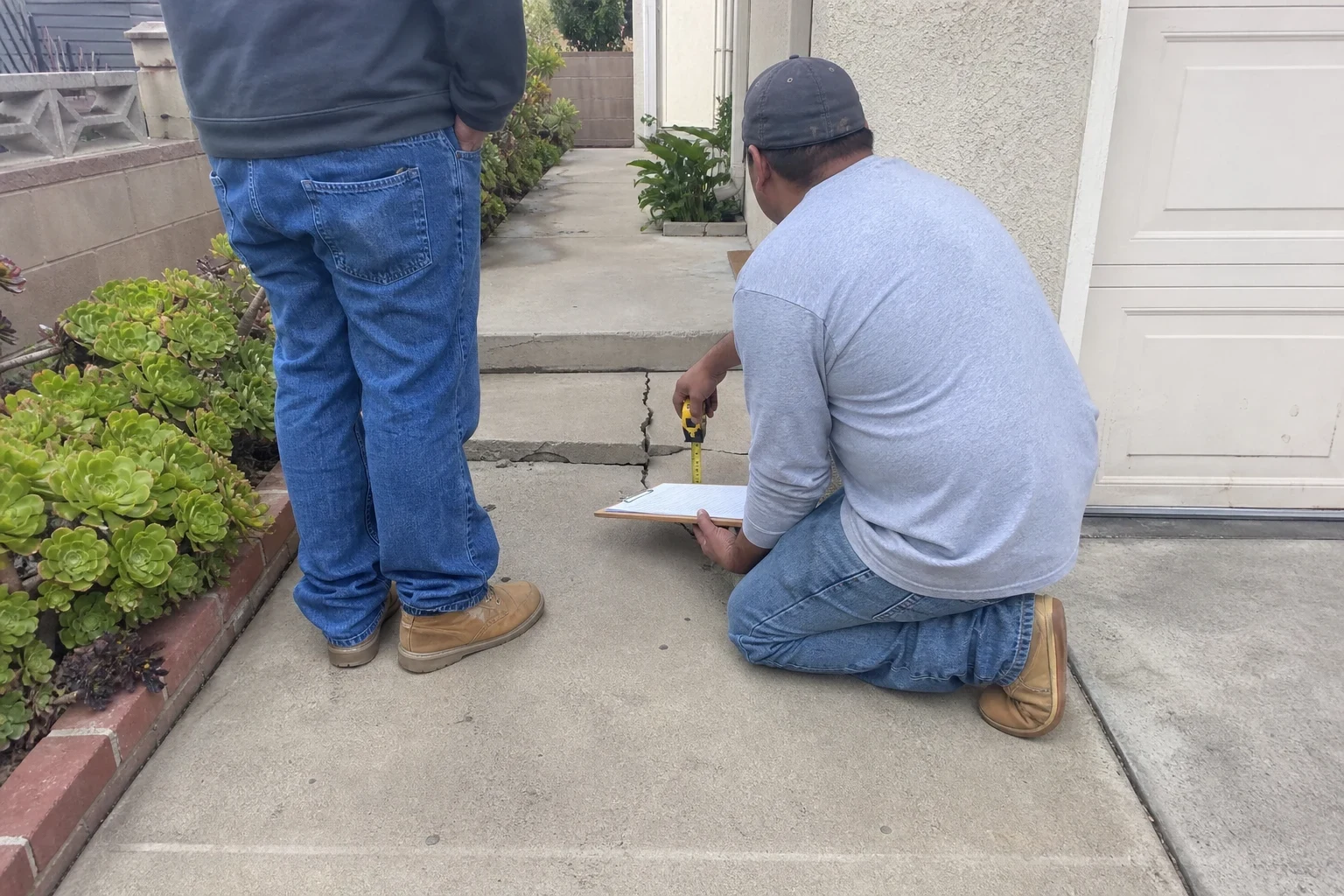
We look at the width, the gate, the slope and what is mounted on the wall. We measure, get some before pictures and talk about where the water should go.
- 2
Written estimate
You get a line-item estimate that spells out demolition, base, reinforcement, drains and finish. Nothing is hidden in a single lump number.
- 3
Dig-out, base and forms
Before digging we call in a utility markout. Then we remove the old material, compact the base and set forms and steel. You get photos of each stage before we schedule the pour.
- 4
Pour day
Narrow gates often mean wheelbarrows or a small line pump instead of chuting off the truck. We protect the stucco and the fence, place and finish the concrete, and cut the joints.
- 5
Cleanup and final photos
We pull the forms, clean the walls and haul off waste. You get the final set of pictures and simple care notes, including how long to keep heavy bins and foot traffic off.
Side yard questions
How wide does a side yard need to be for concrete?
Almost any side yard can be poured. Very narrow ones just take more hand work. We measure the gap at the walk-through and tell you how we would get the concrete in.
Can you pour right up to the house?
Yes, with an expansion joint against the foundation so the slab can move on its own. We keep the finished height below the stucco weep screed and slope it away from the wall.
What happens to my gas meter and AC unit?
They stay where they are. We form around them so the utility can still reach the meter and the AC pad stays level. If the AC pad itself needs to be replaced, we can talk through that at the walk-through.
How soon can I walk on it or roll the trash cans?
Walking on it is normally okay within 24 to 48 hours. Full bins are heavier than they look, so give the slab around seven days before rolling them across. Hot or cool weather shifts that a little, and we tell you the timing for your pour.
Do I need a permit for a side yard slab?
Simple flatwork often does not need one, but drainage changes or work near property lines can. We check with the city for your job before we start so there are no surprises.
Can you do the walkway out front at the same time?
Yes. Many people tie the side yard into a new path to the front door or the driveway. See our Walkways and Sidewalks page, and we can price both on one estimate.
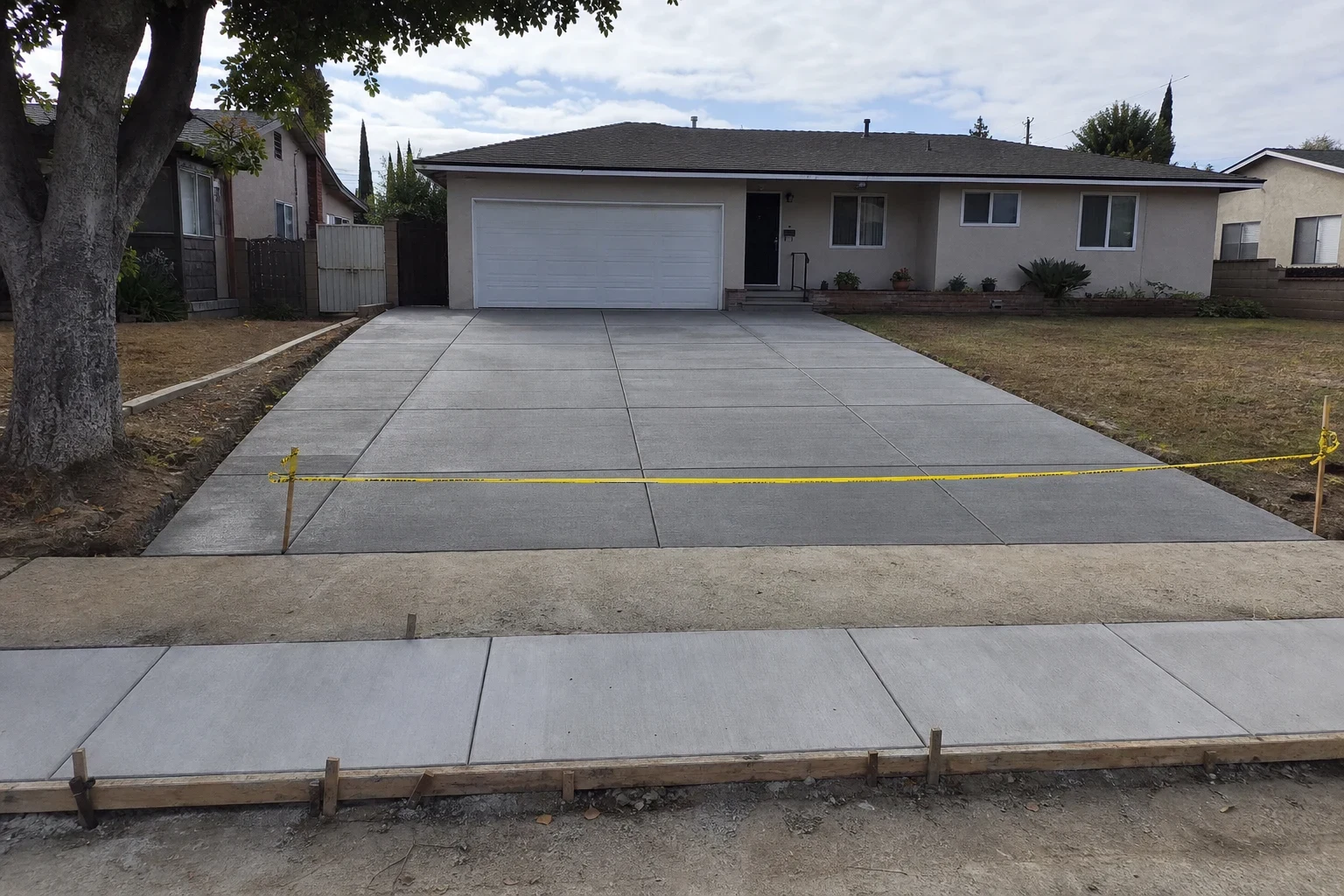
Ready to get rid of the mud along the house
Tell us how long the side yard is and what is on the wall. We'll pick a day to come out, look it over together and get the before pictures.