ServicesConcrete Backyards
Concrete Backyards in Lakewood, CA
We clear out the dead lawn, the dirt patches and the old mismatched slabs, then pour your backyard as one planned job. Grade, base, steel and finish are done in order. You get photos of each step, so you see what sits under the surface.
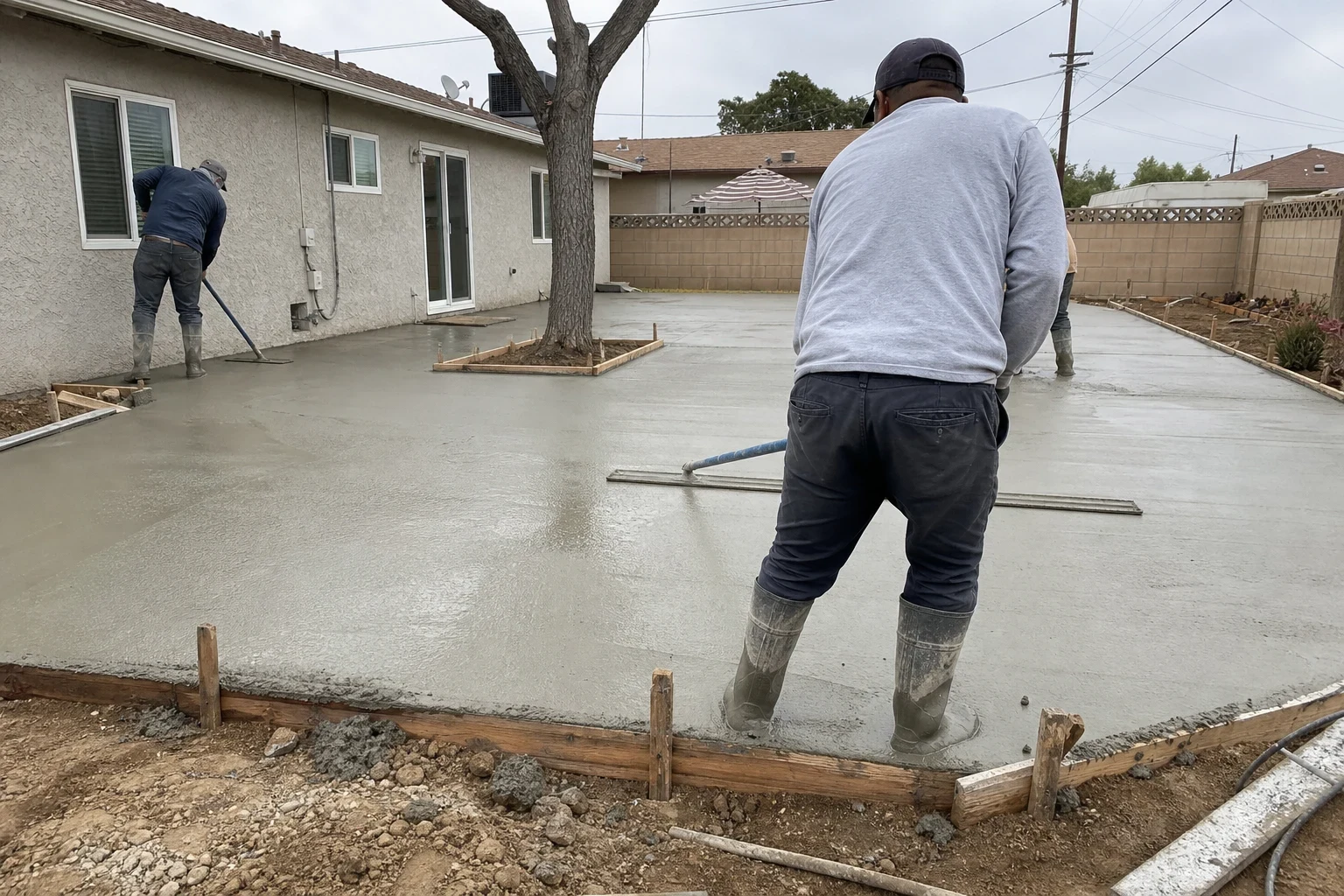
Laying Out the Space Behind Your Home
Pouring a full backyard is a bigger job than adding a patio. We look at all of it: where you sit, where you walk, where the trash cans go, where the water runs when it rains. Then we lay it out as one pour or a few connected pours, with joints and edges that line up.
It is the right call when the yard has become a chore. Lawn that never fills in, bare dirt that turns to mud, or a patchwork of old slabs poured at different times. Many homes around Lakewood still have a small original patio with grass or dirt around it, and a full backyard pour ties it all into one surface.
We photograph the yard before we start, after tear-out, at the base and steel stage and after the finish. You see what we found under the old surface and what we did about it.
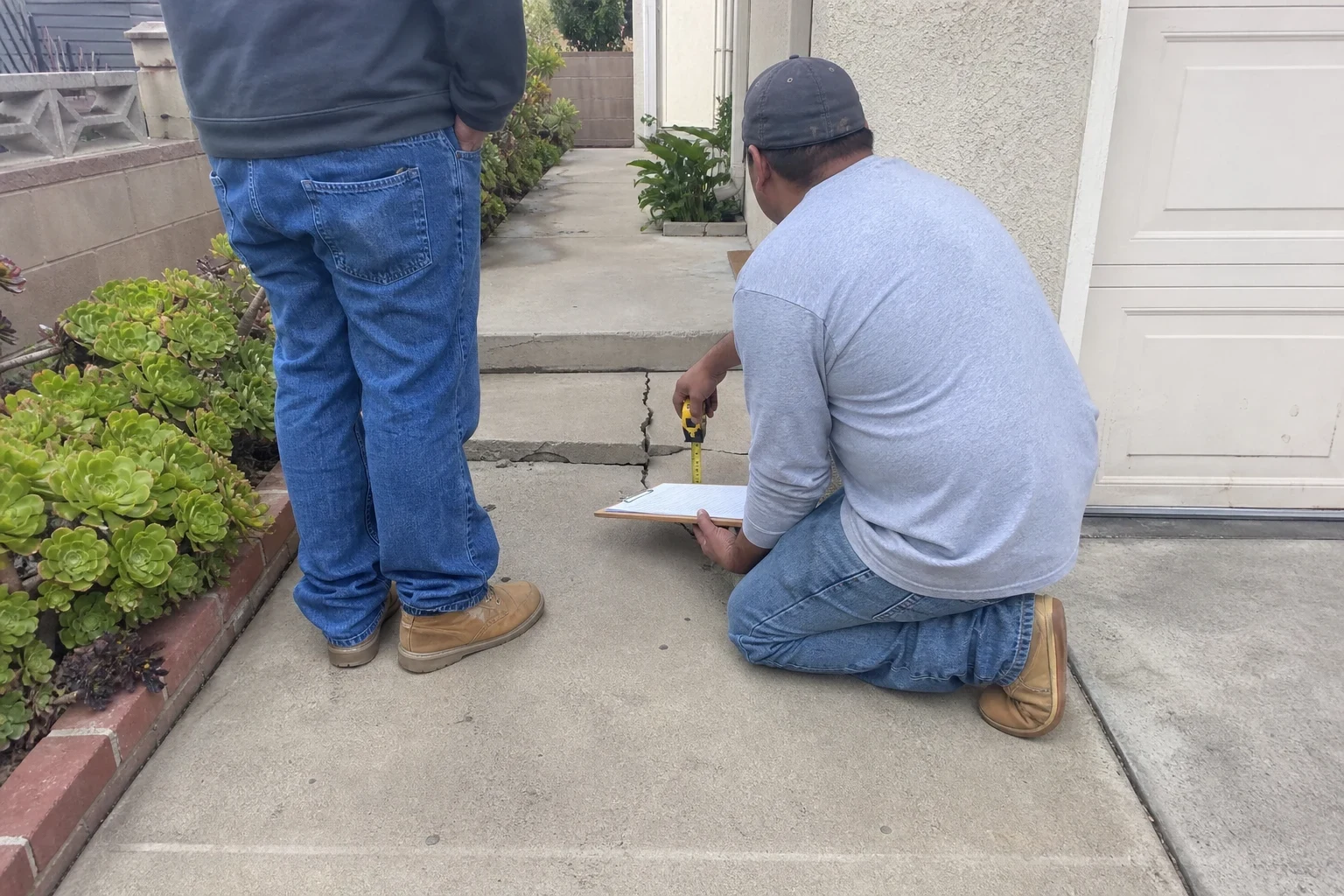
What We Handle on a Backyard Pour
- 01
Clearing the old yard
Old slabs, sod, roots and loose fill all come out, and we load it up and take it off your property. When we hit something unexpected, like an old pipe, buried junk or a soft patch of ground, we pause and show you before going on.
- 02
Setting the slope
The grade is set so rain runs away from your home and out toward the edge of the yard or into a drain. A dead-flat yard that leaves standing water against the foundation is what we watch for most closely.
- 03
Gravel base and steel
A layer of gravel goes down and gets packed tight. Rebar or wire sits up on small chairs so it lands in the middle of the slab, not flat on the dirt. You get to see all of this before the concrete truck shows up.
- 04
Edges, joints and surface
We build straight, clean forms and cut control joints where the slab would otherwise crack on its own. Then we finish it the way you chose. Most people go with a broom finish for traction, and stamped concrete can cover part of the yard or all of it.
- 05
Openings for planters and trees
We can leave spaces in the slab for trees, garden beds or a future shade post. Let us know at the start, since forming an opening is far simpler than cutting one out after the pour.
Questions about Concrete Backyards?
Call(562) 573-5481Signs Your Backyard Is Ready for Concrete
The lawn never comes back
You water it, reseed it, and it still goes brown in summer. Concrete ends the watering and mowing for good.
Water sits by the house
After a rain, puddles stay next to the foundation or the back door. A new pour with the right fall moves that water away.
Mud ends up indoors
Bare dirt turns to mud in the wet months and dust the rest of the year. Kids and dogs carry it straight inside.
A yard of mismatched slabs
An old patio, a narrow strip by the fence and a few pavers, all at different heights. Edges like that trip people and catch weeds.
Old concrete that has heaved
Slabs tipped up by roots or settled into a low spot are often past saving. We take them out and start fresh with a proper base.
How the Job Runs
- 1
Measure and plan together
We go through the yard with you, take measurements, check how the ground falls and see how equipment can reach it from the street. We talk about planters, paths and where you want to sit. Then you get a written estimate broken out line by line.
- 2
Remove and grade
Our crew pulls out the old surface and shapes the grade. You get photos of what we hauled out and anything we turned up below it.
- 3
Base, forms and steel
We pack the gravel, set the forms and put the steel in place. Since this part gets buried for good once the concrete goes in, we make sure you see it first.
- 4
Pour and finish
A truck brings the concrete. On narrow lots we bring it back with a pump or run wheelbarrows down the side yard. We place and finish the slab, cut the joints and cover nearby surfaces so they stay free of splatter.
- 5
Cure, clean up and final photos
Once the slab sets, we strip the forms, clean up the work area and send you the last round of photos. Walking on it is fine after roughly 24 to 48 hours. Hold off about seven days before the grill and patio furniture go back out.
What Moves the Price
Every backyard is priced on its own. The size matters most, but what is already there and how we get to it can matter almost as much. Your written estimate shows each part as its own line.
- Size and slab depth
- A bigger yard takes more concrete, more gravel and more hours from the crew. A spot that will hold a hot tub or other heavy load may need a deeper slab.
- What comes out first
- Lawn is quick to remove. Old concrete, buried roots or thick debris take more time, equipment and dump fees.
- Access to the backyard
- A wide gate lets a small machine in. A narrow side yard can mean wheelbarrows or a pump truck, which adds to the cost.
- Finish and extras
- A plain broom finish costs the least. Stamped sections, color, planter cutouts and drains each add to the job.
Backyard Concrete Questions
Can you pour around the trees we want to keep?
Yes. We form a cutout around the trunk and leave room for the roots to breathe. Big roots close to the surface can lift a slab over time, so we will show you where we see that risk and suggest a wider opening if needed.
Won't a concrete yard get hot in summer?
Light gray concrete stays cooler than dark pavers or asphalt, but it does warm up in full sun. A broom finish, a lighter color and some shade from a planter bed or tree cutout all help. If you are leaning toward a darker stamped color, we will talk about the trade-off first.
Where will the rain go?
We slope the yard away from your home toward a lawn edge, a planter or a drain. If the yard is boxed in by walls, we may suggest a drain line. That gets planned and priced before we pour.
Do I need a permit for backyard concrete?
Plain flatwork in a backyard often does not need one, but drains, retaining edges or work near property lines can change that. We check what your job needs. If a permit is required, we pull it.
How will I see what you did under the slab?
We take photos before work starts, after tear-out, at the base and steel stage, and when the job is done. You see the gravel depth and the reinforcement before concrete covers them.
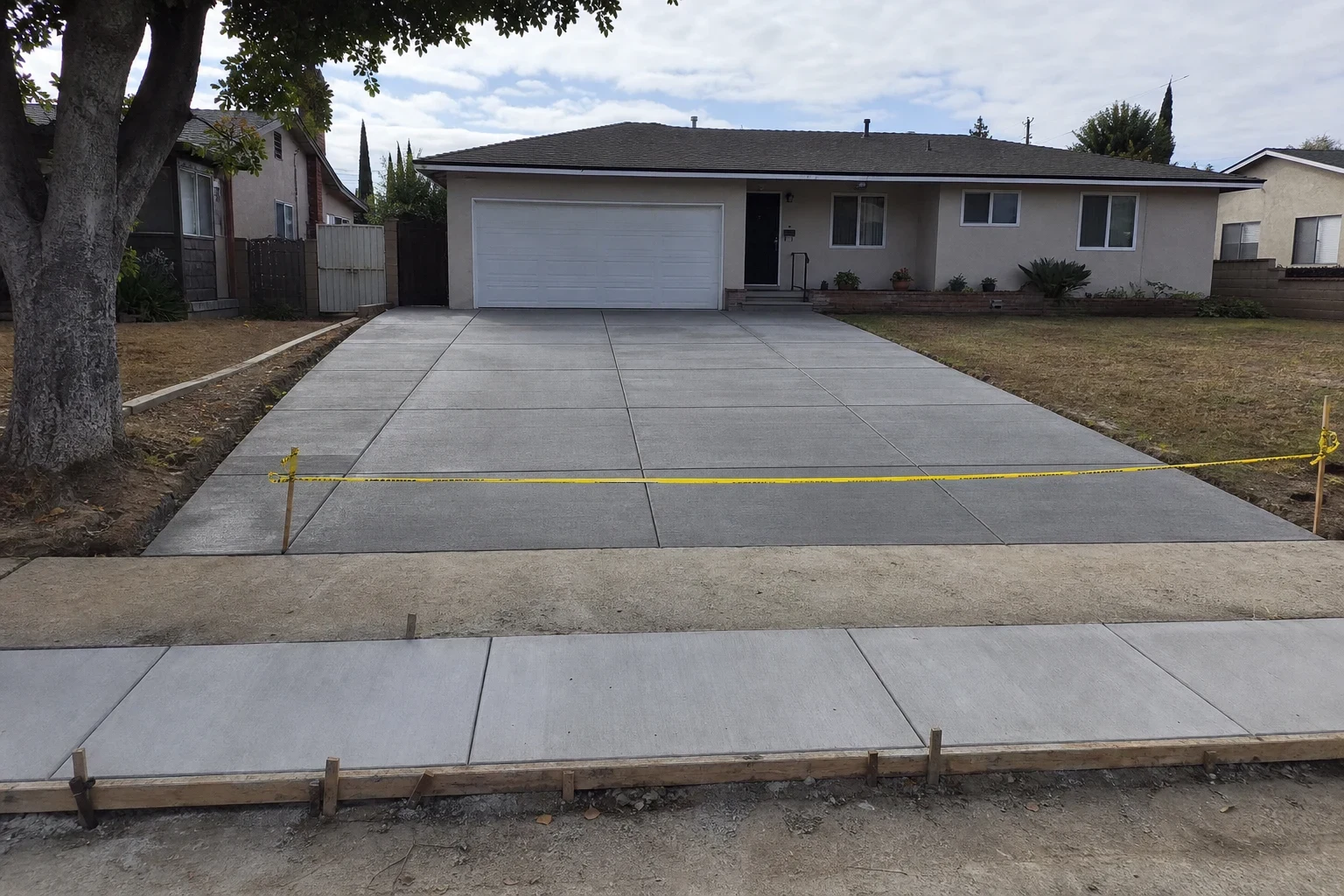
Ready to Be Done With the Dirt and Dead Grass
Tell us about your yard, what you want to keep and what you plan to do out there. We'll come out to walk it, take measurements and go over the options with you.