ServicesConcrete Slabs
Concrete Slabs in Lakewood
We pour slabs for sheds, hot tubs, AC units, trash can areas and small work spaces around your home. We dig out, compact the base, set the steel and pour. You get photos of each step, so you can see what sits under the finished surface.
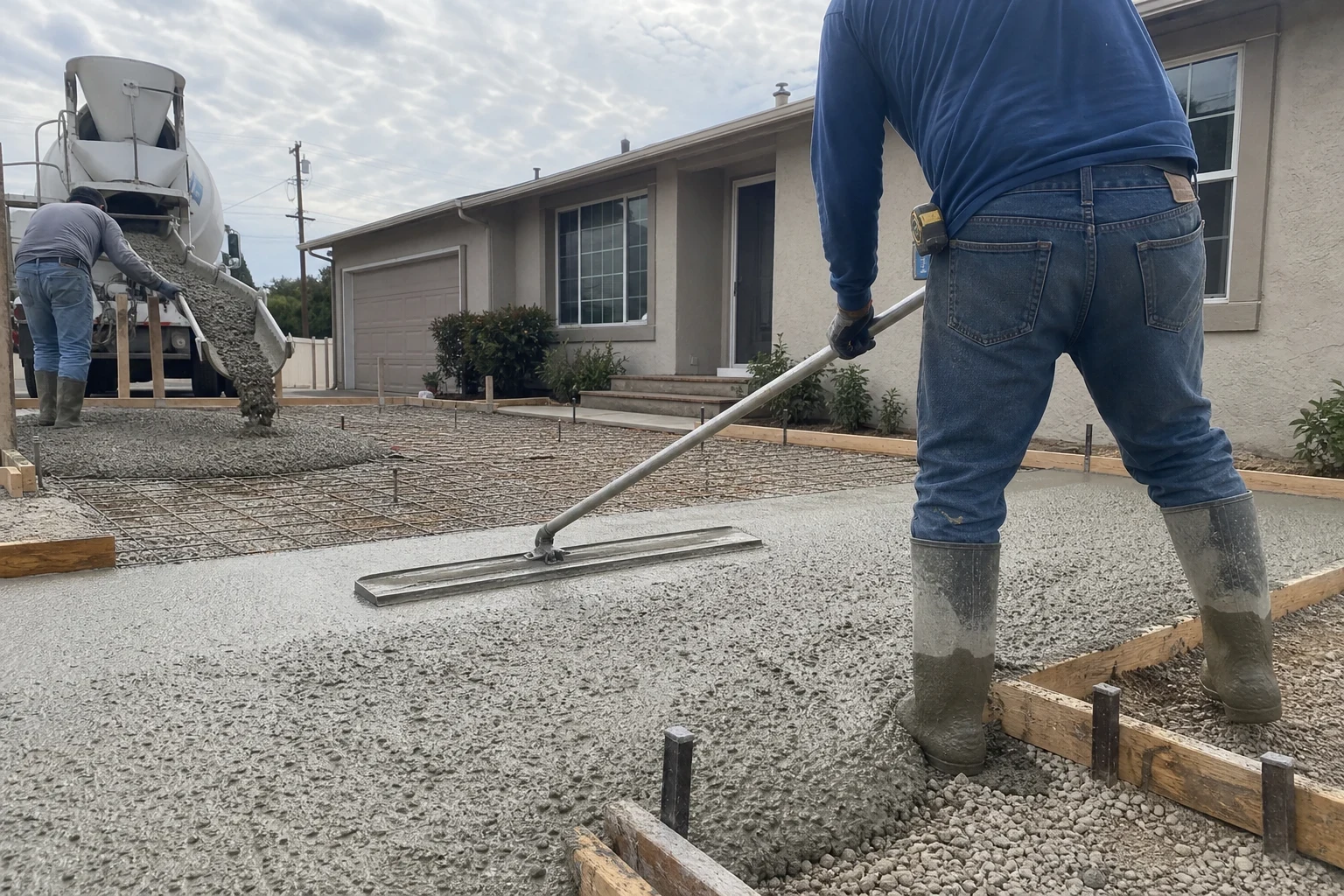
A slab is only as good as what's under it
On the surface, a slab is just flat concrete. The trouble usually comes from underneath: soft soil, a thin layer of base rock or steel that got left out. After the pour, none of that is visible.
That's why we take photos as we go. You see the dug-out area, the compacted gravel, the forms and the rebar before any concrete shows up. If we hit something odd in the dirt, like old roots, buried debris or a soft spot, we show you and tell you what we plan to do about it.
A slab is the right call when you need a level, solid spot for something heavy or something you walk on every day. If you want a bigger outdoor living area, our patios and concrete backyards pages cover that work.
What goes into every slab job
- 01
Layout and dig-out
We mark out the size with you on site, then strip off grass, old pavers or dirt to the depth the slab needs. We grade the area so rain drains away from your home instead of toward it.
- 02
Packed rock base
Next comes crushed rock, spread a few inches at a time and run over with a plate compactor after each layer. Lots of yards around here sit on clay that swells in wet months and shrinks in dry ones. A firm base gives the slab a steadier footing through that cycle.
- 03
Forms and steel
Wood forms set the outline and the finished height. Rebar or wire mesh goes up on small supports so it ends up in the middle of the concrete, not lying in the dirt where it can't help.
- 04
Pour and finish
We place the concrete, screed it flat and finish the top for how it will be used. Outdoors, a light broom texture adds grip. Under a shed or a cover, a smoother trowel finish makes sense.
- 05
Control joints
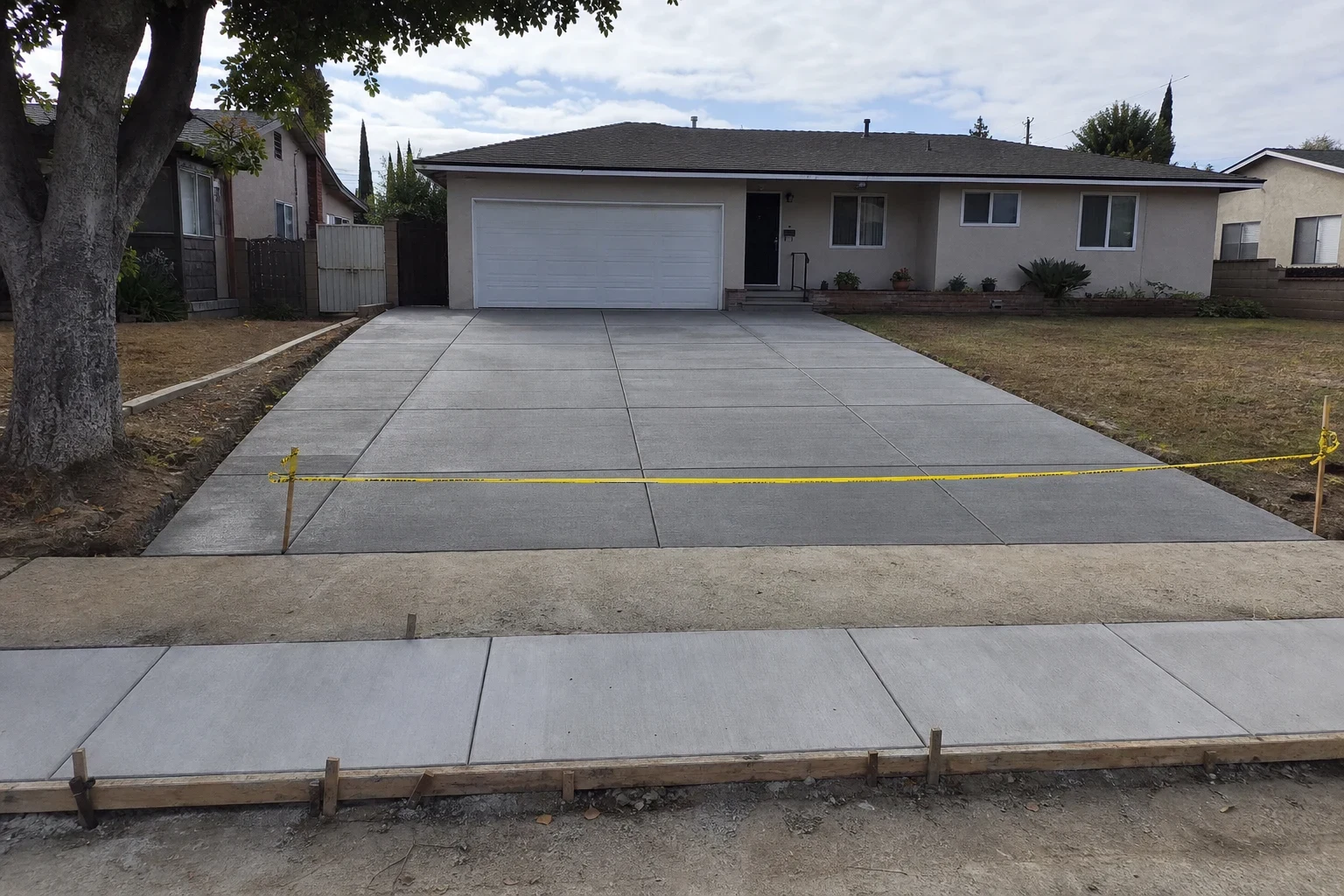
As concrete dries it shrinks slightly. We cut joints at set intervals so any cracking follows a planned line inside the groove, where it's hard to spot.
- 06
Photos and cleanup
You get pictures at every stage of the job. Before we leave, the extra dirt and old forms are hauled off and the work area is hosed down.
Questions about Concrete Slabs?
Call(562) 573-5481Signs it's time for a new slab
Your shed or hot tub sits on dirt or pavers
Pavers and gravel shift over time. A shed that leans or a hot tub that rocks needs a flat, solid base under it.
The old slab is broken up
When an old slab is cracked into pieces, sunken or tilted, it's done. Tearing it out and pouring new is often the cleaner fix.
Water pools near your home
If rain sits on an old slab or runs toward the house, the slope is wrong. A new slab can be pitched to move water away.
You're adding equipment
A new AC condenser, generator or water heater pad needs a level spot that won't settle. Small pads count too.
Mud where you work or store things
Trash cans, bikes and tools end up in a muddy patch. A slab gives you a clean, flat spot you can sweep.
From first call to finished slab
- 1
First call and a look at the site
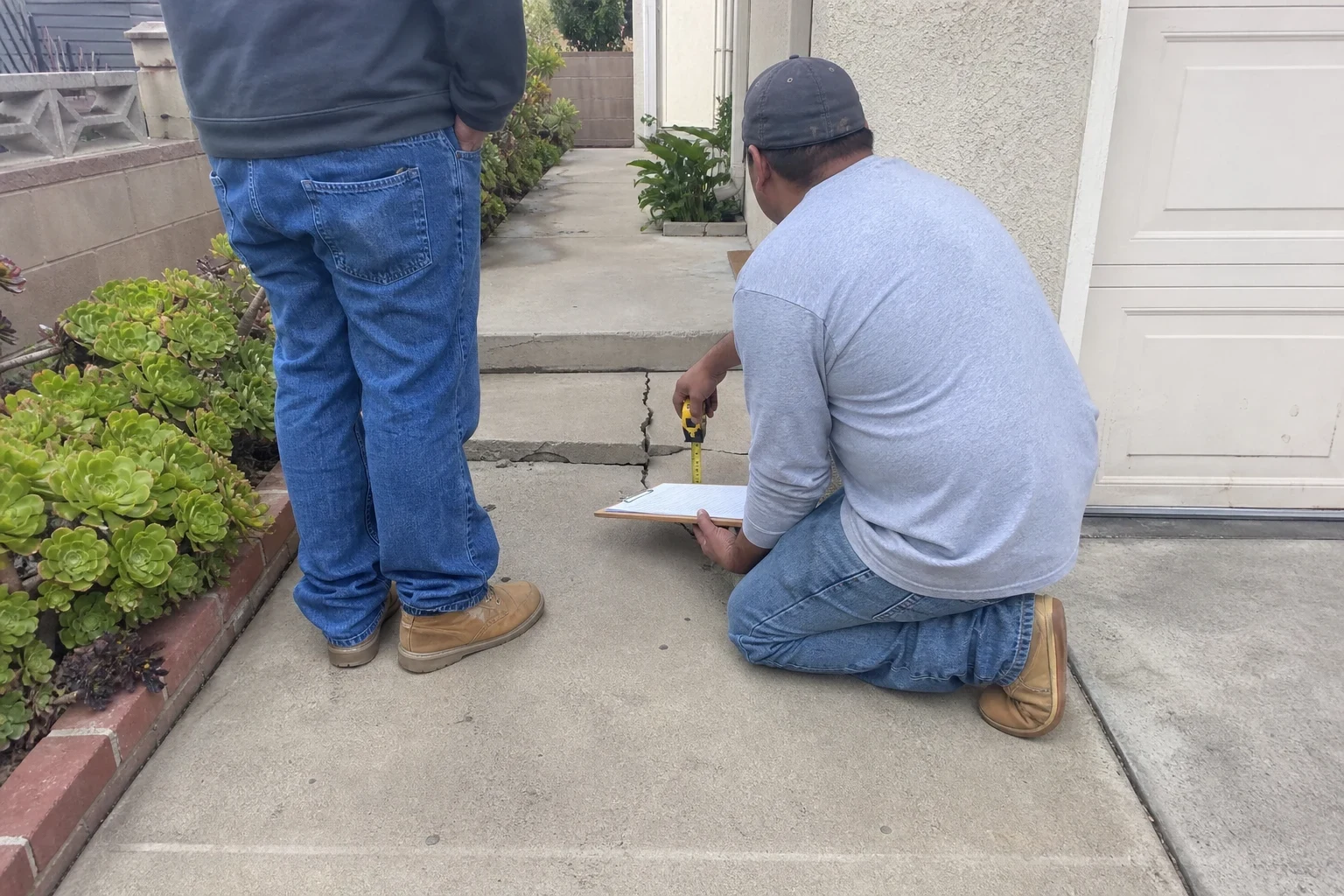
On the phone, tell us what the slab needs to hold and roughly where it goes. Then we come by to measure, check how we'll get materials in and look at the soil and drainage. You get a written price afterward, broken out line by line.
- 2
Permit, when required
Depending on size and use, the city may require a permit. If yours does, we file for it and book the inspection.
- 3
Prep day
The crew digs out the area, packs the base, builds the forms and sets the steel. You get photos of all of it before any concrete arrives.
- 4
Pour day
The mix comes off the truck or through a pump. We spread it, level it, finish the surface and cut the joints. Small slabs are usually poured and finished by midday.
- 5
Curing and handoff
Foot traffic is fine after a day or two. We let you know when the slab can take a shed, hot tub or vehicle, and send the final round of photos.
What sets the price of a slab
No two slabs cost the same. Square footage is part of it, but getting materials to the spot and what turns up in the dirt matter just as much. The written estimate breaks the job into line items, so nothing on it is a mystery.
- Size and thickness
- More square feet means more concrete, more base rock and more steel. A pad that carries a hot tub or a vehicle has to be poured thicker than one that holds trash cans.
- Getting to the spot
- When the truck can pull up close, the pour moves quickly. A narrow side yard or a backyard behind a fence may call for a pump or wheelbarrows, and that adds labor.
- Clearing out the old
- Clearing grass is quick. Breaking up an old slab and hauling the pieces away takes longer and costs more, especially when the old concrete is thick or full of steel.
- Soil and base work
- Roots, soft spots or heavy clay can mean digging deeper and bringing in extra base rock. You get photos of what we run into, so the reason for the extra work is clear.
- Finish and extras
- A plain broom finish is the least expensive. Color, a stamped pattern, thickened edges or anchor bolts for a shed each take more time and material.
Concrete slab questions
How thick should my slab be?
That comes down to what it will carry. Foot traffic, trash cans and small sheds are fine on a standard thickness. Hot tubs, bigger sheds and anything on wheels need more concrete. On the site visit we'll tell you what thickness we'd pour and why.
Will my slab crack?
Some fine hairline cracks are normal, since concrete shrinks a little as it cures. The joints we cut give those cracks a place to form, down in the groove. A well-packed base and steel set at the right height are what keep the slab from breaking apart or sinking.
Will the city want a permit for my slab?
It can. The slab's size, what it's used for and the city's current rules decide it. When a permit is required, we take care of pulling it and setting up the inspection.
The truck can't get to my backyard. Can you still pour there?
Yes. We can pump the concrete over or around the house, and on small jobs we can wheel it in. Access does change the price, so we look at it carefully when we visit.
When can a hot tub or shed go on the new slab?
Walking on it is fine after a day or two. Heavy loads need to wait longer while the concrete gets stronger. We'll give you a date based on how thick your slab is and the weather that week.
What will the photos show?
You'll get pictures of the dug-out area, the packed base, the forms, the steel in place and the finished pour. If buried debris or a soft spot turns up, you'll see that too, along with how we dealt with it.
Need a solid spot for something heavy?
Tell us what the slab is for and where it goes. We'll set up a visit, look at the ground and give you a written estimate. We also serve Long Beach, Bellflower, Cerritos and nearby towns.