ServicesRV Parking Pads
Concrete RV Parking Pads in Lakewood
An RV is far heavier than a car, and a thin slab or a patch of lawn won't hold it for long. We build pads thick enough for the load, sloped to drain, and we send you photos of the base and steel before any concrete covers them.
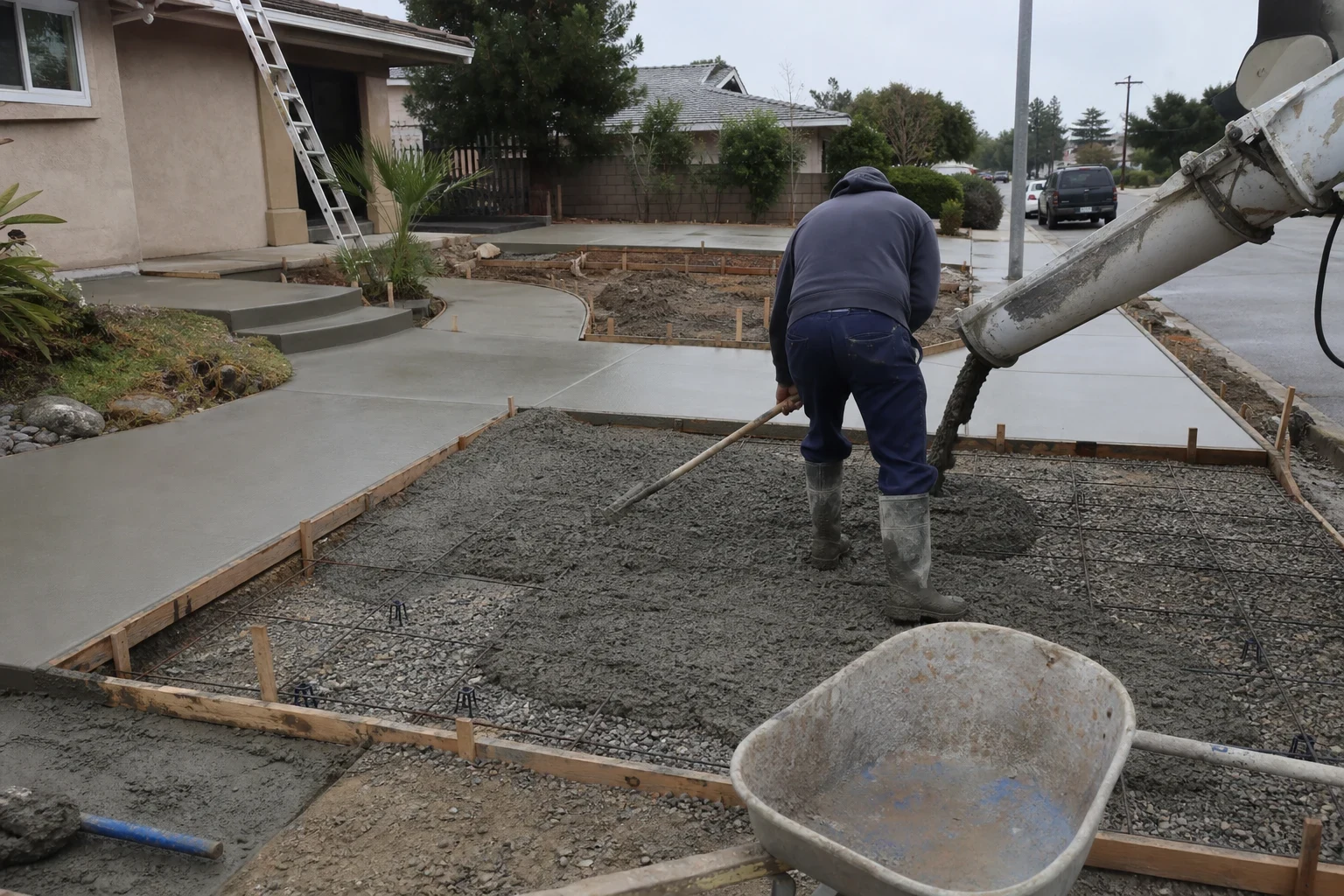
A pad built for the load it holds
Most driveways are poured about 4 inches thick. That's plenty for cars. A loaded trailer or motorhome puts several tons on a few tires and jack points, and it stays parked in one place for weeks at a time. A thin slab under that kind of load cracks, and the corners start to sink.
Our RV pads go in thicker, usually 5 to 6 inches. The rebar is tied in a grid and propped up on small supports, which holds the steel at mid-depth inside the concrete instead of letting it rest on the ground. Beneath all of it is a compacted base. A lot of the soil in this area is clay that swells with winter rain and shrinks through the dry season, and a solid base keeps the pad from moving with it.
Nothing gets hidden. Before the pour we photograph the excavation, the compacted base, the steel and the forms, so you have a record of what's under the surface long after it's covered.
What the job includes
- Layout sized to your rig
- We measure your RV, the turning room from the street and any gate it has to pass through. Most pads end up 12 to 14 feet wide, with length to fit the unit plus room to walk around it.
- Digging and compacted base
- We remove sod, old gravel or broken concrete and dig to the right depth. Then we lay crushed base and compact it in layers so it doesn't settle under the wheels.
- Rebar on chairs
- Steel is tied in a grid and lifted off the ground so it sits inside the slab where it can do its job. You get a photo of it before the pour.
- Thicker pour and a firmer mix
- We order a stronger mix than a typical walkway uses and pour to full thickness across the pad. Control joints are cut so any cracking happens in a straight line where we planned it.
- Drainage slope
- The pad is pitched slightly away from your home and toward the street or a drain, so rain doesn't pool under the RV or run against your walls.
- Cleanup and haul-off
- Dirt, old material and form boards leave with us. Your yard is raked and swept when we go.
Signs it's time for an RV pad
Ruts in the lawn or gravel
Tires sink in after rain, and the gravel spreads out a little more every time you pull in or out.
The RV sits out of level
If you're stacking blocks under the jacks or the fridge won't run right, the ground under it is moving.
Your driveway is cracking where the RV parks
A slab built for cars will start breaking up under the steady weight of a trailer. A pad built for the load is the better fix for that spot.
Water pools under the rig
Standing water under an RV means rust on the frame and soft ground under the tires. A sloped pad sends it away.
You just bought an RV and need a spot
Planning the pad before the rig comes home is easier than moving it around on soft dirt for a season.
What moves the price
Every pad is priced on what we find at your place. The size and thickness matter most, but what's under the ground and how we get to it can change the number a lot. We go through each line with you so you know where the money goes.
Size and thickness
A longer, wider or thicker pad takes more concrete, more steel and more base. A big motorhome needs more than a small trailer.
Soil and what's already there
Soft clay may need deeper digging and more base. Tearing out old concrete or a lot of gravel adds labor and dump fees.
Access
If a truck can't reach the spot and we have to pump or wheelbarrow the concrete through a narrow side yard, that adds time and equipment.
Gates, fences and curb work
Widening a gate, moving a fence section or adding a wider drive approach at the street adds work, and the curb part often needs its own city permit.
How the work goes
- 1
Site visit and measuring
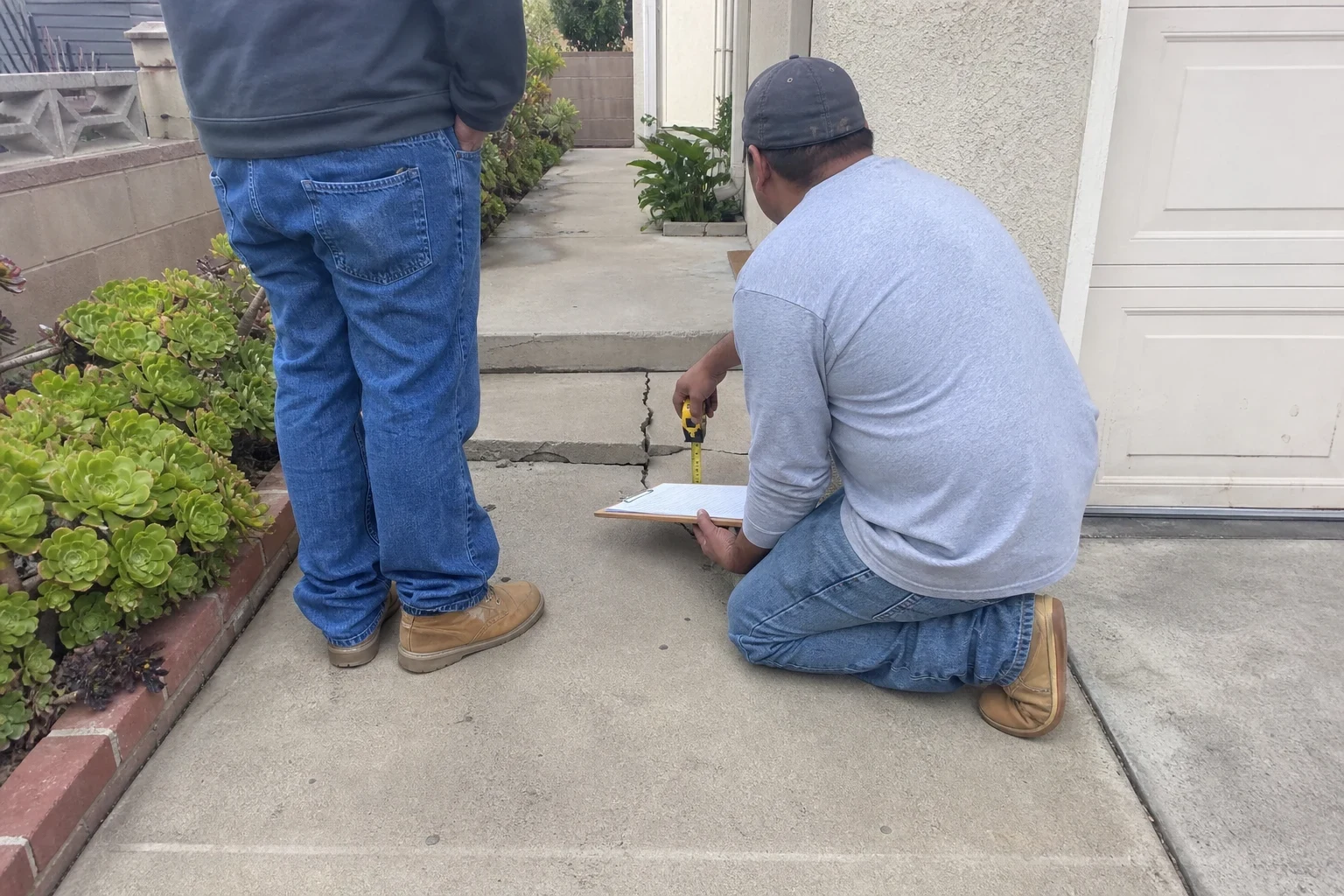
We look at where you want the pad, check the soil, the slope, the gate width and the path from the street. We also check the city's rules on where an RV can be parked and whether a permit is needed for your setup.
- 2
Written estimate by line
You get a breakdown by line: digging, base, steel, concrete, any fence or gate changes and haul-off. Nothing gets added without talking to you first.
- 3
Dig, base and steel
This usually takes a day or two. We photograph each stage and send the pictures to you before we pour.
- 4
Pour and finish
Pour day is one day for most pads. We finish with a broom texture so tires grip when it's wet, then cut the control joints.
- 5
Curing and first parking
You can walk on it in a day or two. We'll tell you when it's safe to bring the RV home, and with a heavy rig we suggest waiting longer than you would for a car.
Questions about RV pads
How thick does an RV pad need to be?
Five to 6 inches covers most trailers and motorhomes, poured with rebar over a compacted base. A heavier rig may need more. Once we know what you own and how the soil looks, we'll give you the right number.
Can I just extend my driveway for the RV?
Usually, yes. The new section should be built for RV weight, though, not matched to the thinner driveway beside it. We tie the two together and put a joint between them so each can shift a little without cracking.
When can I park the RV on the new pad?
A fresh slab gains most of its strength slowly over the first month. A car can usually go on after about a week. A heavy rig should wait longer, and we'll give you a date based on the mix we used and the weather that week. Holding off a bit is cheap insurance against early cracks.
Do I need a permit?
That depends on where the pad goes and whether the curb or sidewalk gets touched. Cities in the area set rules on RV parking and how much of a front yard can be paved. We look into it before we start, so a notice doesn't show up after the concrete is down.
What do the photos show?
The excavated area, the compacted base, the steel raised in place, the forms with the slope set, and the finished pad. Those are the parts you can't see once the job is done, and the photos are yours to keep.
Give your RV a solid place to park
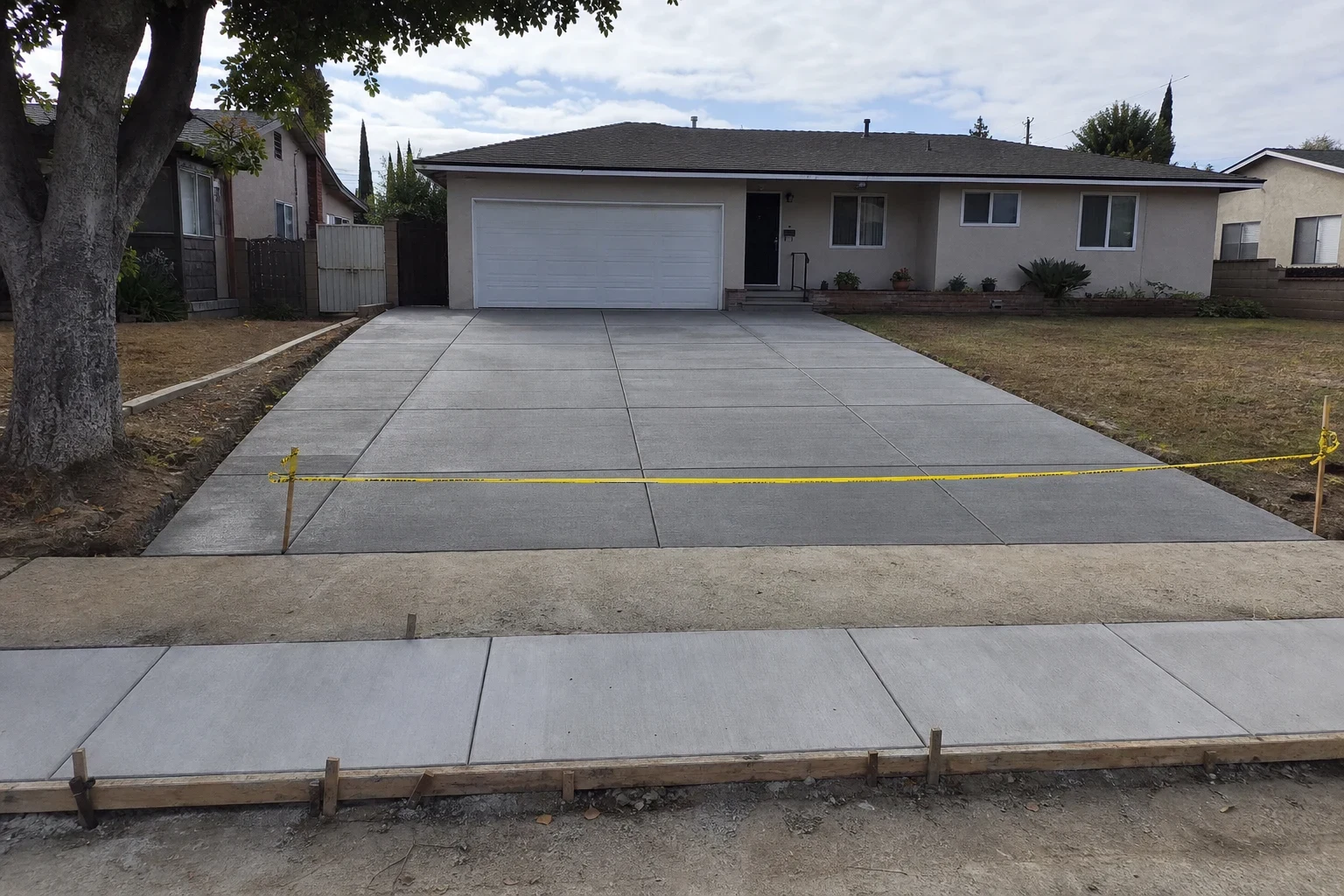
Let us know how big your rig is and the spot you have in mind. We'll come out to measure, look at the soil and go over your options, including whether a wider driveway or a side yard location works better.