ServicesConcrete Pool Decks
Concrete Pool Decks in Lakewood
We remove the old deck around your pool and place a new slab pitched to send splash water out toward the yard, finished to grip wet feet and stay cooler in the sun. Before any truck arrives, you see photos of the soil, base, steel and forms.
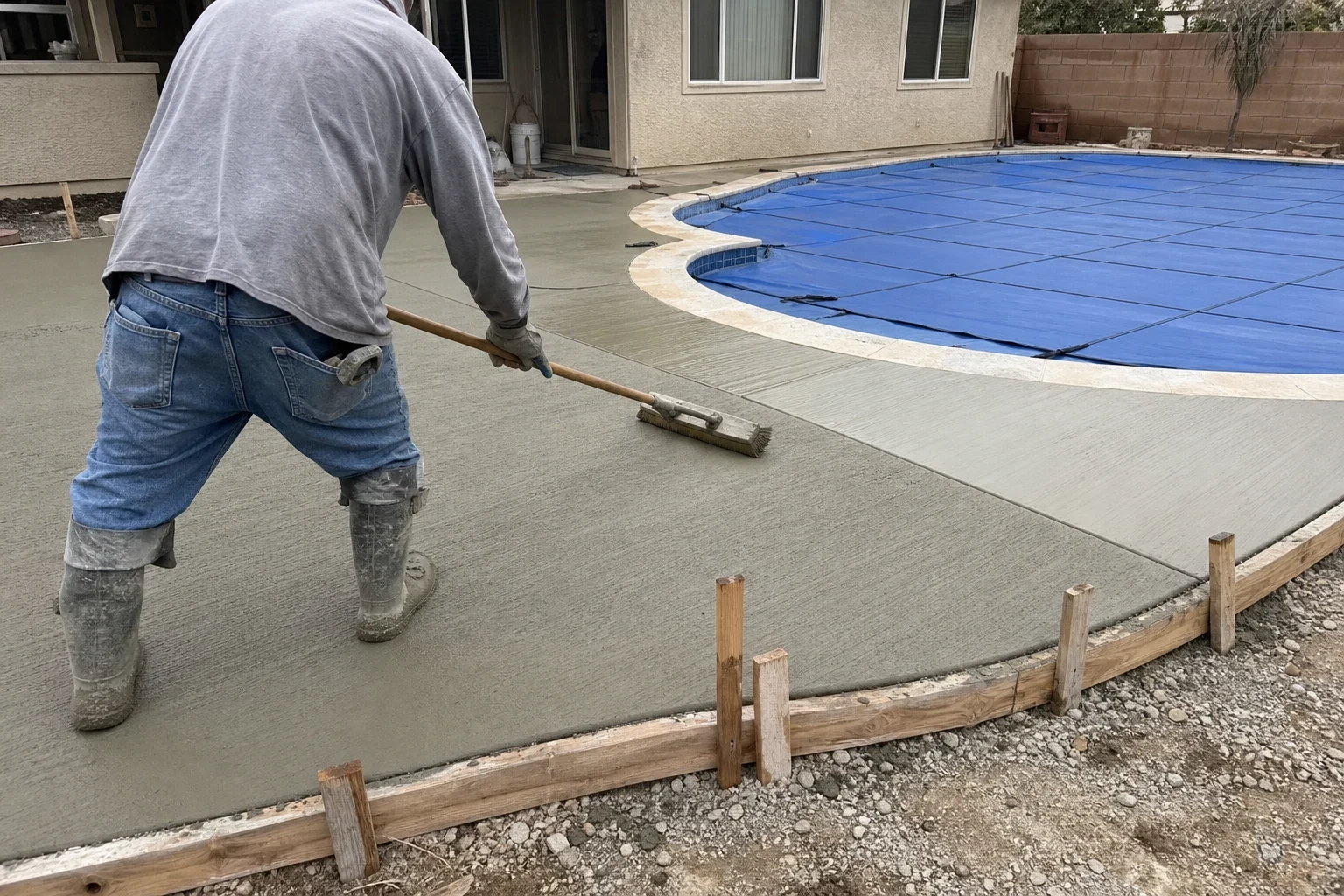
A new deck around your pool, from the dirt up
Concrete around a pool works harder than any other slab at your home. It stays wet much of the summer, takes chlorine or salt splash, sits in full sun and carries bare feet all day. Once the old deck has cracked clean through, heaved, or started leaning toward the water, starting over with a new slab makes more sense than living with it.
Our crew breaks up the old slab, trucks it away, reshapes and packs the ground, sets steel and places a new deck with the fall, joints and surface a pool needs. We work carefully along your coping and tile, and the water stays covered the whole time.
You see each stage as it happens. We send photos of the soil under the old deck, the packed base, the rebar on its chairs and the cut joints. If the ground underneath changes the plan, you see the picture first, then we talk it through.
What a pool deck job includes
- Demo and removal
- A concrete saw cuts a straight line along the edges, then we break up the old deck and load it out. The pool cover goes on and the coping gets padded first, so dust and chunks never reach the water.
- Grade and compaction
- We reshape the ground so the new deck sheds water away from the pool, typically around a quarter inch of fall per foot. The base gets packed in lifts so the slab rests on firm soil instead of loose fill.
- Rebar and joints
- Rebar sits up on chairs in the middle of the slab, where it actually does its job. Control joints give cracks a straight place to form. Where deck meets coping, we leave a joint filled with flexible sealant so each one can move on its own.
- Surfaces that grip
- Common choices are a salt finish, a light broom texture or a cool-deck coating. All of them hold bare feet when wet. If you want a pattern, our stamped concrete work pairs a textured mat with a sealer that has grit mixed in.
- Channel drains
- Walled-in yards with little fall need a place for splash water to go. We can set a channel drain into the deck during the pour.
- Your job record
- When we finish, you have photos of demo, base, steel, pour and the cured surface. That record shows what lies under the slab, which helps if you sell your home someday.
Signs your pool deck is due for replacement
Puddles creep back to the coping
When rinse water or rain drifts toward the pool instead of the yard, the deck is pitched wrong. Dirt and leaves end up in the water, and the slope will not correct itself.
Raised or sunken sections
Clay soil around here swells after wet winters and shrinks through dry summers. Slabs that lifted or settled leave lips that catch toes.
Deep, growing cracks
Hairline surface cracks are normal and mostly cosmetic. If a coin slips into the crack, or it gets wider each season, the slab has broken and shifted.
Coping joint gone dry
Once the sealant between deck and coping cracks out, water runs under the slab and can wash the base away from below.
Too slick or too hot
Worn finishes turn slippery when wet. Dark, smooth or glossy concrete can be too hot to stand on by mid-afternoon in summer.
Surface flaking off
Years of chemical splash soften the top layer. Once scaling starts, more of it lets go every season.
What moves the price of a pool deck
A phone call gets the conversation started, but we set the price after seeing the deck in person. What has to come out and how we reach the pool matter as much as square footage. These are the main things that change the number.
Square footage and layout
A bigger deck takes more material and more hours. Freeform pools need bent forms along the curves, which take longer to set than straight edges.
The old slab
Thick concrete, heavy steel, or a second layer poured over the first all slow down demo and add to disposal.
Access to the backyard
When a truck can't pull close, we pump the mix or wheel it in through a side yard. Tight gates and long carries add labor.
Surface type
Broom texture is the most basic. Salt finish, cool-deck coating and stamped patterns each bring extra steps and materials.
Slope fixes and drains
Correcting the fall or setting a channel drain happens at the base stage. Handling it then costs much less than dealing with it after the concrete is in.
How the work goes, start to finish
- 1
Site visit
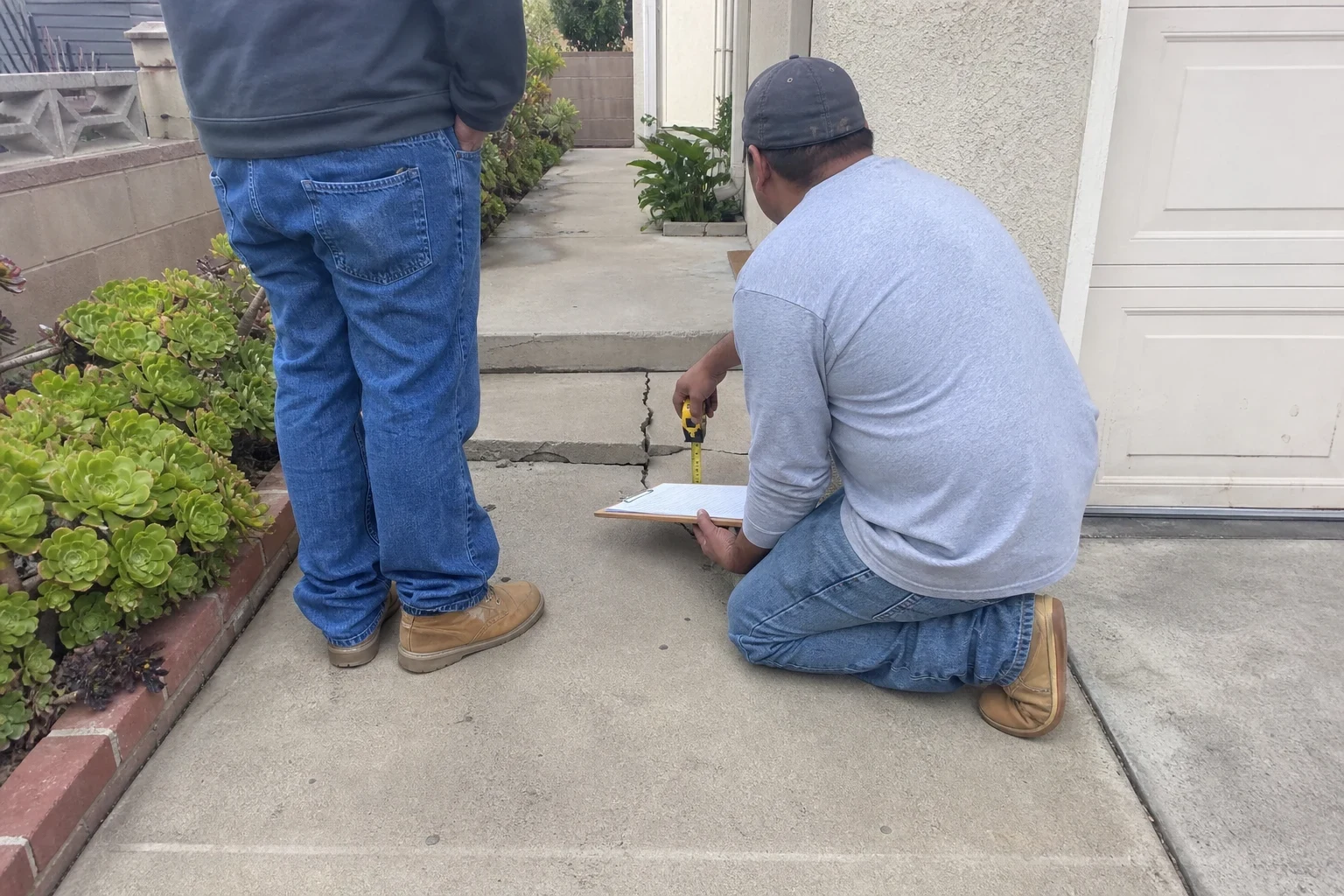
We come by, measure the deck, check the existing fall with a level and photograph its current condition. Your written estimate breaks out demo, base work, steel, finish and drains as their own lines.
- 2
Demo and prep
We cover the pool, pad the coping and remove the old concrete. Then we grade, compact, build forms and tie the rebar. You get pictures of the prepped base and steel before the truck is booked.
- 3
Pour day
Concrete arrives by truck, or by pump when the backyard is tight. We place it, screed it and finish it in one pass, then saw the joints once it sets up.
- 4
Curing and final cleanup
Keep off the new deck for a day or two. Walking is fine after that, and chairs and tables can go back in about a week. We seal the coping joint, clean the site and send the finished shots.
Pool deck questions
Should I drain the pool first?
No, leave it full. An empty shell can lift or shift from groundwater pressure, and the weight of the water holds it in place. We keep it covered during demo and the pour.
Could my coping or tile get damaged?
We saw a clean line before breaking anything, and the coping stays padded through demo. If a coping stone was already loose, we stop, show you a picture and talk it over before going on.
Which surface stays coolest underfoot?
Light colors run cooler than dark ones. A cool-deck coating stays coolest, and a salt finish in light gray or tan is comfortable too. Dark tints and glossy sealers heat up the fastest.
How soon can we swim again?
Once the cover is off and the area is cleaned up, the water is ready to use. The concrete is a different story: no walking on it for a day or two, and about a week before loungers go back.
Is a permit needed for a pool deck?
That depends on the size of the job and what the city asks for. We find out up front, and if one applies, we take care of getting it before work begins.
What if I'm at work while the job is going on?
You still see everything. We send pictures at each stage, from demo through the finished surface, so you know what went under the deck.
Ready for a deck that's easy on bare feet
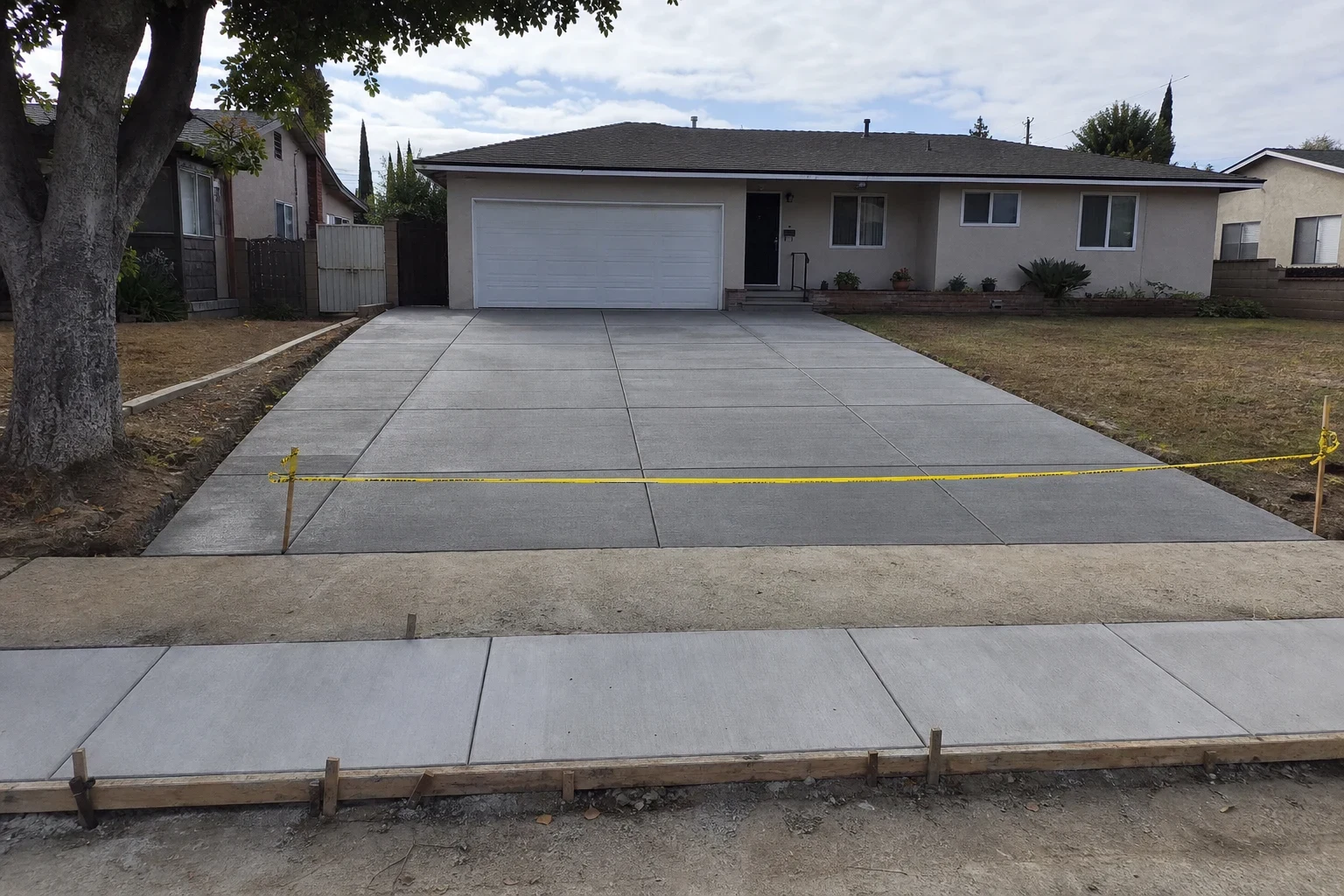
Tell us about your pool, the deck you have now and what bothers you about it. We work in Lakewood and nearby towns like Bellflower and Cerritos. After the call, we pick a day to stop by, take measurements and check the slab, the fall and the coping in person.