ServicesGarage Floors
Concrete Garage Floors in Lakewood
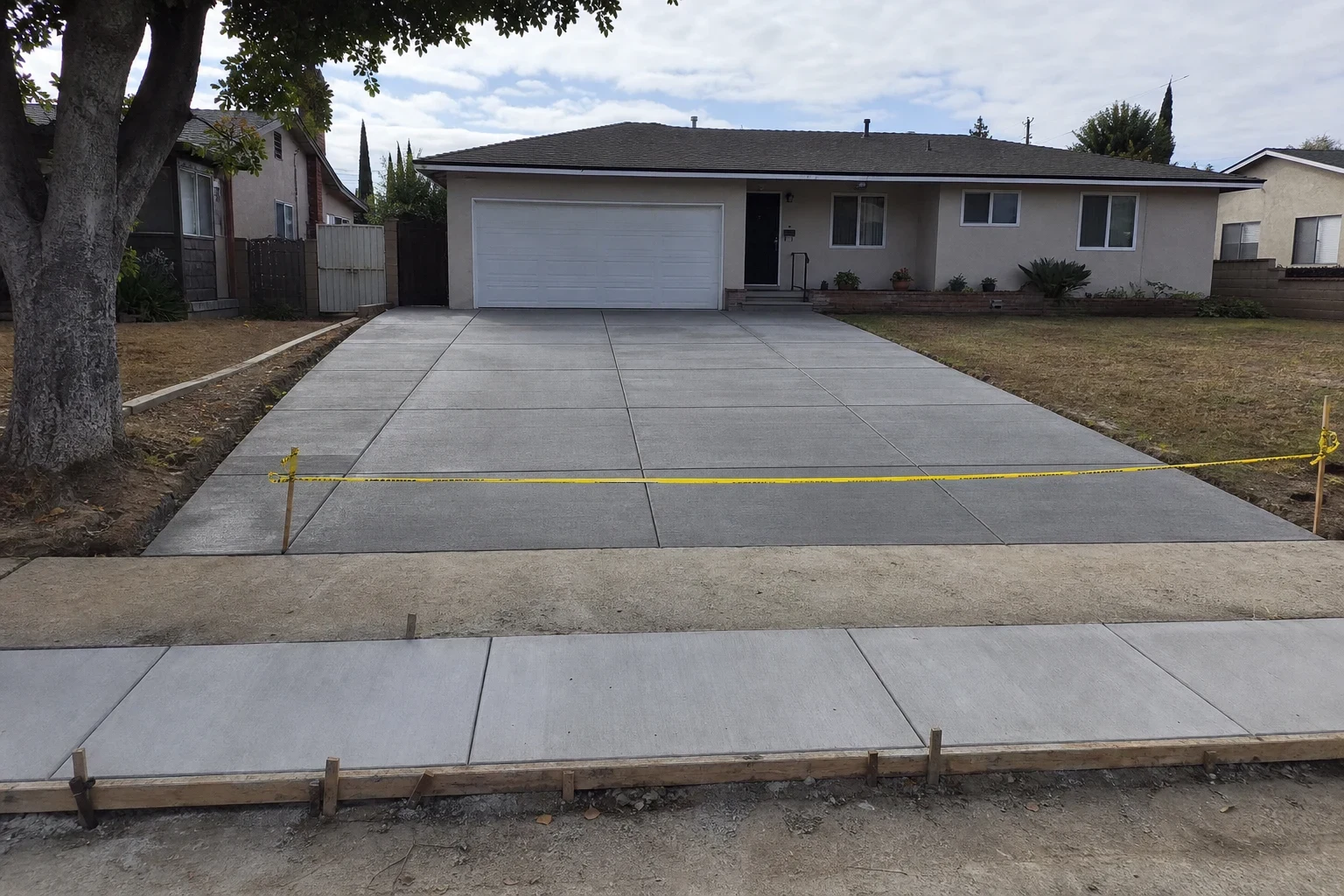
We tear out tired garage slabs and pour new ones that sit flat, drain toward the door and hold up to cars and heavy shelving. You get photos of the old base, the steel and the finished floor, so you see every stage.
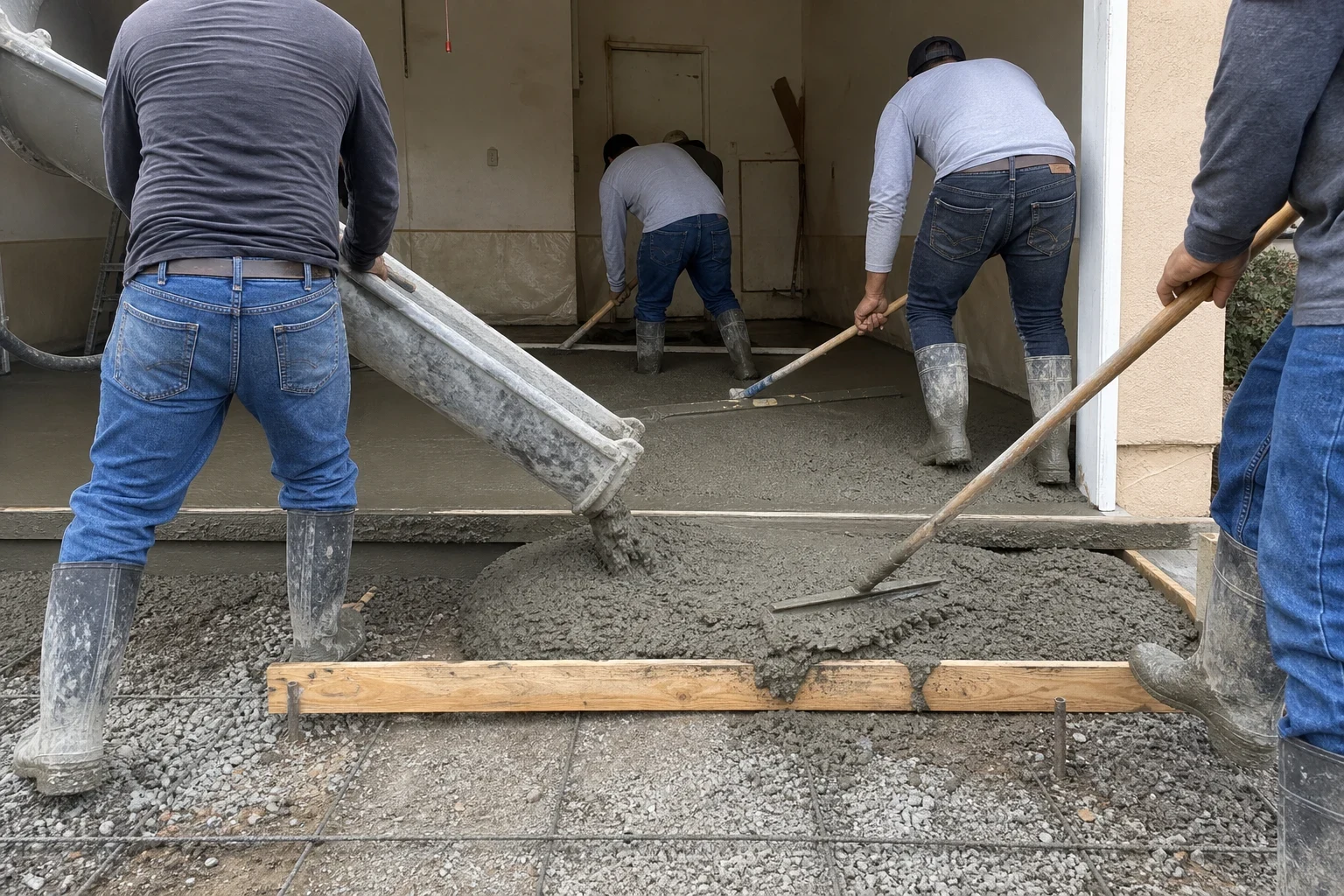
When a new garage floor is the right call
A garage floor carries more weight than most concrete around your home. Cars, tool chests, a second fridge, maybe a workbench. Over the years a slab can sink, heave or break into loose sections that rock when you drive over them. Once it gets there, the fix is to take it out and pour it again.
We remove the old concrete, check the soil under it and pour a new slab at the right thickness with steel inside. Many older garages here and in towns like Bellflower and Cerritos still sit on a thin slab with little or no reinforcement, which is why they break up.
We take photos as we go. You see what was under the old floor and how the new one was built, even if you were at work that day.
What the work includes
- Tear-out and haul-away
- We saw-cut a clean line at the garage door and along the driveway, break out the old slab and haul off every piece. Walls, the door track and the house threshold get covered before the breaker starts.
- Base prep and compaction
- We dig out soft or wet soil, bring in base rock where it is needed and compact it in layers. Most failed garage floors trace back to a weak base, so we do not rush this part.
- Vapor barrier and steel
- A vapor barrier keeps ground moisture from wicking up through the slab. We prop the rebar up on small supports, so once the concrete goes in the steel ends up mid-depth instead of resting on the soil.
- Slope toward the door
- We set the forms so the floor falls slightly toward the garage door. Water off a wet car or from a leaking water heater runs out instead of pooling against the house.
- Finish and control joints
- You can pick a smooth trowel finish or a light broom finish for more grip. We cut control joints so normal shrinkage cracks follow a straight line.
- A photo record of the job
- You get pictures of the exposed base, the barrier and steel before the pour, and the finished slab.
Signs your garage floor needs replacing
Sections rock or shift
If a piece of the floor moves when you drive or walk on it, the base under it has washed out or settled. That will not settle back on its own.
A lip at the garage door
When the slab sinks below the driveway, you get a bump at the door and rain runs into the garage instead of out.
Water pools inside
Puddles that sit near the back wall or run toward the house mean the floor has lost its slope.
Wide cracks with a height change
A hairline crack is normal. A crack you can fit a coin in, with one side higher than the other, means the slab is breaking apart.
The surface is crumbling
Flaking and loose sand across the floor usually means weak original concrete. Paint and coatings will not hold on a surface like that.
You plan heavier use
A car lift or heavy tool storage can be too much for a thin old slab. It makes sense to pour the right floor before the weight goes in.
How a garage floor job runs
- 1
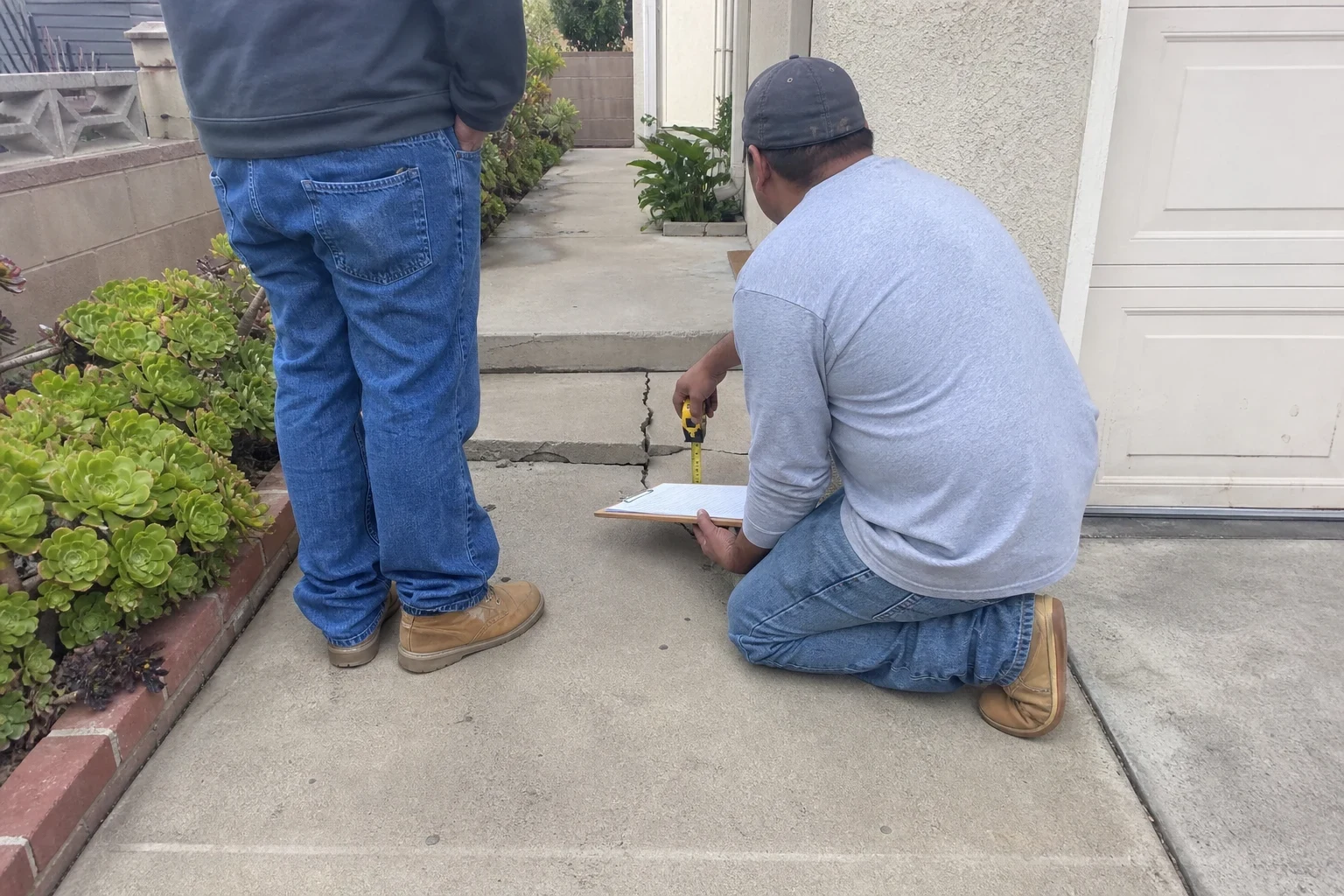
We look and measure
We come out, measure the garage and check how the slab meets the driveway and the house. Then we go over the estimate with you line by line, so you know what each part covers.
- 2
You clear the garage
Cars and stored items come out before demo day. We tell you how much driveway space we need for equipment and the haul trailer.
- 3
Demo and prep
We cut, break out, haul, grade and compact, then lay the barrier, steel and forms. We photograph each stage. If we find something unexpected, like soft fill or an old pipe, we show you the picture and talk with you before going on.
- 4
Pour and finish
The truck pours, and we screed, float and finish the surface the way you picked. Control joints get cut while the concrete is still green.
- 5
Cure and cleanup
You can walk on the floor after a day or two. Plan on about a week before parking a car, longer for heavy loads. We clean up the site and send you the finished pictures.
What moves the price
Every garage is a little different, so we price each floor after we see it. The estimate breaks out each part of the job so there are no surprises later. These are the things that change the number most.
- Size of the garage
- A single-car garage takes less concrete, steel and labor than a deep two-car or three-car space.
- What comes out
- A thicker old slab, or one with steel inside, takes longer to break up and fills more loads to haul away.
- Soil under the slab
- Soft fill or wet ground has to be dug out and replaced with base rock. We take pictures of what we find so you can see why it matters.
- Thickness and steel
- If the floor will carry a lift or very heavy storage, we may pour it thicker or add more rebar.
- Access and finish
- A tight driveway can mean hauling by wheelbarrow or bringing in a pump. Your finish choice also plays a small part.
Garage floor questions
Something not covered here? (562) 573-5481
How long will I be without my garage?
The hands-on work usually takes a couple of days, demo and prep first, then the pour. After that the concrete needs time to gain strength. Plan on about a week before you park on it, and longer before you roll in anything very heavy.
Can you just pour a new layer over my old floor?
We do not recommend it. Pouring on top raises the floor, which can leave a step at the garage door and at the door into the house. Whatever made the old slab fail is still underneath and tends to show through. Taking it out and starting from a good base is the job that lasts.
Will my new floor crack?
Some fine lines are normal. All concrete loses a little volume as it dries and hardens, and that can open thin cracks in the surface. Control joints, a compacted base and steel keep those lines tight and guide where they form. What you should not see is sections sinking or moving.
Can I put epoxy or a coating on it later?
Yes. The slab needs to cure fully first, which usually takes around a month. Tell us your plans before the pour, and we will leave a finish that a coating can bond to.
Do I need a permit to replace a garage floor?
It depends on the scope of the work. We will tell you at the estimate whether your job needs one, and if it does, we pull it and schedule the inspection.
Let's look at your garage floor
Tell us what is going on with your slab and how you use the garage. We will set a time to come out, measure and walk you through what a new floor involves.