How Much Does a 20x20 Stamped Concrete Patio Cost in Lakewood?
A 20x20 slab is 400 square feet, and the stamping is only part of what you pay for.
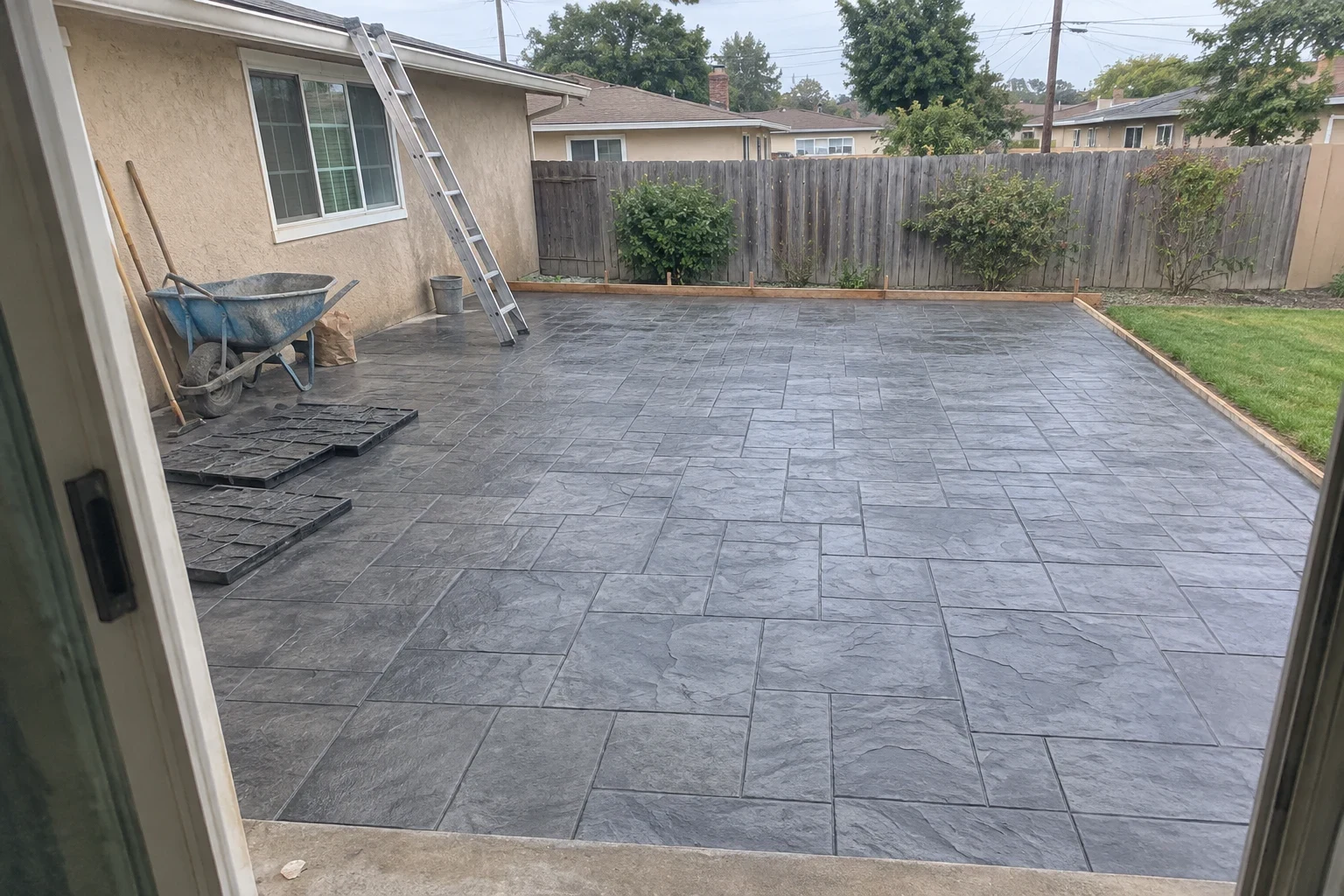
How much does a 20x20 stamped concrete cost?
There is no honest flat price for a 20x20 stamped slab until someone sees the spot. The cost comes down to what has to come out first, how the ground is prepped, the pattern and color method, access for the crew, and sealing. We walk you through each line on a written estimate. Talk it over at (562) 573-5481.
What goes into the price of a 400 square foot stamped slab
Think of the job in layers. Some costs are the same on every slab. Others depend on your yard.
The fixed parts are the concrete itself, the steel, the forms, and the labor to place and finish it. A 20x20 at a normal patio thickness of about 4 inches takes roughly 5 cubic yards of concrete. Stamping adds a crew that has to work fast while the surface is at the right stage, so it takes more hands than a plain broom finish.
The parts that change from yard to yard are where most of the difference between two quotes comes from.
- Tear-out: removing an old slab, pavers or lawn and hauling it away
- Base prep: grading, compacting and adding crushed rock where the soil needs it
- Pattern and color: one color versus two, a simple pattern versus a detailed one
- Access: whether a concrete truck can reach the forms or the mix has to be pumped or wheeled in
- Sealer and any extra steps like borders or steps tied into the slab
Why the ground under your slab matters so much
A lot of yards around Lakewood sit on clay soil. Clay swells when it gets wet in winter and shrinks in a dry summer. If it goes straight under a slab without prep, the slab can crack and settle, and stamped concrete is not cheap to pull out and redo.
So we dig to the right depth, compact the subgrade, and put down a rock base where the soil calls for it. We set rebar or wire so the slab holds together, and we plan control joints so any shrink cracks land in a straight line where you can't see them. That prep is a real line on the estimate. We take photos of the dug-out area and the base before any concrete shows up, so you can see what's under there after it's covered.
How pattern and color change the cost
Stamping is done with mats pressed into the wet concrete. A plain ashlar slate or a running bond pattern goes down faster than a detailed flagstone or wood plank look with a lot of hand touch-up at the edges.
Color can be mixed into the whole batch, broadcast onto the surface as a hardener, or both. A second tone, added with a release agent during stamping, gives the grout lines and texture more depth. Each step adds material and time. If you want a smooth border band around the outside, that's another pass the crew has to finish by hand.
We bring sample photos of patterns and colors so you can pick something you like without paying for detail you don't care about.
Access, permits and timing
Many homes here are single-story ranch houses with narrow side yards. If the truck can back up close to the forms, the pour is simple. If the slab is in a backyard with no way in for the truck, the mix gets pumped over or through, and that adds cost. We look at this on the first visit and tell you how we'd get the concrete in.
A basic patio slab on your own lot often doesn't need a permit, but a slab under a new patio cover, near a property line, or one that changes drainage may need a look from the city. We check before we start and include any permit in the estimate so it's not a surprise later.
Weather plays a part too. Hot, dry days make concrete set fast, which is tough for stamping. On summer jobs we start early in the morning and plan the crew size around it.
What you get on the estimate and during the job
You get a written estimate with each part broken out: tear-out, base, concrete, steel, stamping, color and sealer. That way you can see what moves the number and decide what to keep or drop.
During the job we photograph each step. You'll see the old surface coming out, the compacted base, the steel and forms, the pour and stamping, and the sealed slab. If we find something underground that changes the plan, like an old footing or a soft spot, we show you the photo and explain the fix before we go further.
- Day one: tear-out and haul-away
- Next: grading, base and compaction
- Forms and steel set, then photos for you
- Pour, stamp and color in one day
- Cure, wash off release, cut joints and seal
More questions about stamped concrete
Something not covered here? (562) 573-5481
How long before I can walk on a new stamped slab?
Usually light foot traffic is fine after a day or two. We wait to put furniture or a grill on it until the sealer is cured, and we'll tell you the date for your job.
Does stamped concrete need upkeep?
Yes, a little. The sealer protects the color and the surface, and it should be redone every few years depending on sun and use. A wash before resealing keeps it looking fresh.
Can a 20x20 slab connect to a walkway or steps?
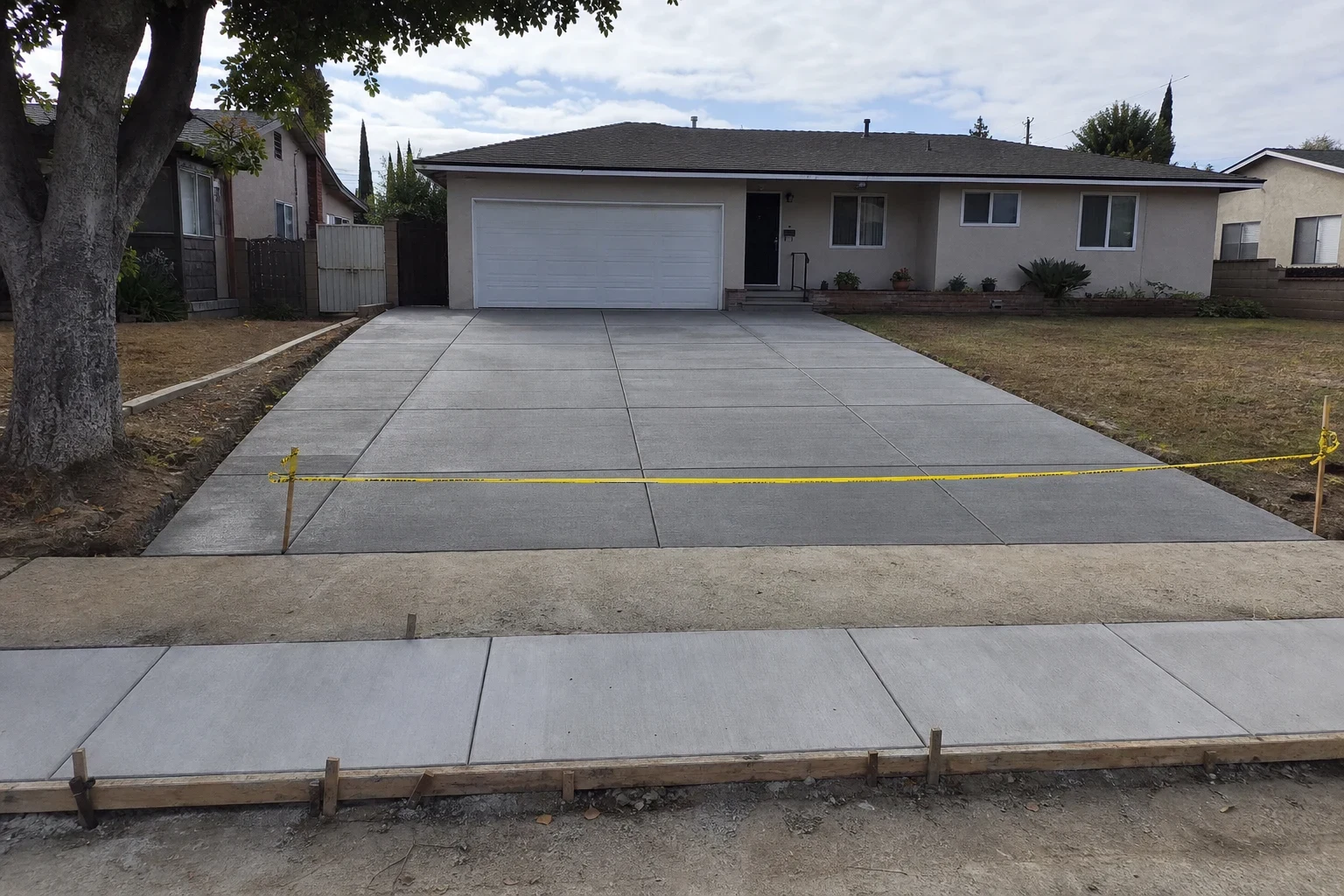
Yes. Many people tie a patio into walkways and sidewalks or a set of concrete steps so the pattern runs through. We price those as separate lines so you can see each one.
Is stamped concrete slippery when it's wet?
A glossy sealer can get slick, especially near a hose bib or sprinkler. We can mix a fine grit into the sealer and steer you toward a pattern with more texture, which helps underfoot.
Find out what your 20x20 slab will take
Tell us the size, what's there now and how a truck would get in. We'll talk through pattern and color choices, set a time to see the spot, and give you a written line-item estimate with photos of what we found.